
When a tree is too big, too tall, or too close to a house to climb and rig safely, crews bring in a crane. It adds cost — but for the right tree it’s safer and sometimes cheaper overall.
Crane-assisted tree removal typically costs $1,000 to $5,000+, with most large-tree jobs landing around $1,500–$3,000. The crane itself often runs $500–$1,500+ per day on top of the removal labor. Size, height, access, and how long the crane is needed drive the price.
See when it’s worth it below, plus the full removal cost guide and the cost calculator.
Crane removal cost
| Scenario | Typical total cost |
|---|---|
| Large tree, good access | $1,000 – $2,000 |
| Very large tree near a house | $2,000 – $3,500 |
| Multiple large trees / difficult site | $3,500 – $5,000+ |
| Crane rental component | $500 – $1,500+/day |
When a crane is worth it
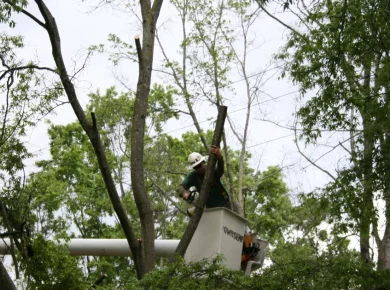
- Huge or very tall trees that are unsafe to climb.
- Trees over a house, pool, or power lines where pieces can’t be dropped.
- Dead/unstable trees that can’t bear a climber’s weight.
- Tight lots where rigging room is limited.
A crane can actually lower total cost on a big, risky tree by speeding the job and reducing the chance of property damage.
What drives the price
- Tree size, height, and weight (crane capacity needed).
- Distance the crane must reach (longer boom = bigger crane).
- Setup space and ground conditions.
- Time on site and number of picks.
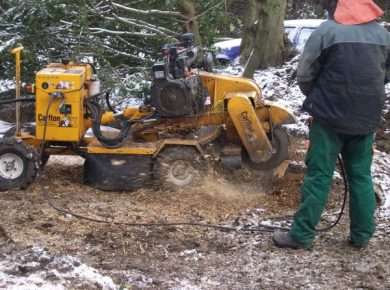
- Stump grinding and hauling (usually separate).
Getting a fair quote
- Get itemized quotes that separate crane, labor, stump, and hauling.
- Confirm the company is insured for crane work specifically.
- Bundle multiple large trees into one crane day to spread the rental cost.
- Compare with a no-crane quote for borderline trees — see oak and cost by size.
Frequently asked questions
How much does crane tree removal cost?
Usually $1,000–$5,000+, with most large jobs $1,500–$3,000; the crane alone is often $500–$1,500+/day.
Is a crane more expensive than climbing?
Per day, yes — but on a huge or risky tree it can be faster, safer, and cheaper overall.
When do I actually need a crane?
For very large/tall trees, dead unstable trees, or trees over structures where pieces can’t be dropped safely.
Does the price include the stump?
Typically not — add stump grinding and hauling separately.
Disclaimer: Prices are general 2026 estimates and vary by region, tree, and site. Get local quotes.
When a crane actually saves you money
A crane adds a day rate, but on a big or risky tree it can lower the total cost by finishing the job in hours instead of days and cutting the odds of expensive property damage. For a towering tree over a house or pool, a crane lift is often safer and cheaper than a slow, high-risk climb-and-rig removal.
What determines the crane price
- Tree size and weight — dictates the crane capacity required.
- Reach — the farther the boom must extend, the bigger (and pricier) the crane.
- Setup space — tight lots and soft ground complicate positioning.
- Number of picks and time on site — more lifts, more cost.
Crane vs. traditional removal
For an ordinary yard tree with room to work, a standard climb-and-rig removal is usually cheaper. Reach for a crane when the tree is very large or tall, dead and unstable (unsafe to climb), or positioned where pieces can’t be safely lowered — over a roof, pool, or power lines. Get one quote each way for borderline trees and compare.
Getting a fair crane quote
Ask for an itemized quote separating the crane, labor, stump grinding, and hauling, and confirm the company carries insurance specific to crane work. If you have several large trees, bundling them into one crane day spreads the rental cost across the whole job and lowers the per-tree price.

 Jack Turner