
Cutting down a tree costs $200 to $2,000 for most homeowners, with a national average of about $750 in 2026. A small tree under 30 feet might cost as little as $200 to $450, while a large tree over 80 feet can run $1,200 to $2,000 or more once a crane and extra crew are involved. Your final price depends mostly on the tree’s height, trunk diameter, and how hard it is to reach safely.
For a tree that has already died, our dead tree removal cost breakdown shows what to expect by size.
This guide breaks down what you can expect to pay in 2026 by tree size, the factors that push your quote higher or lower, whether it makes sense to do it yourself, and the add-on costs—like stump grinding, debris hauling, and permits—that surprise many homeowners. For a deeper dive, see our complete tree removal cost guide or estimate your job with our free tree removal cost calculator.
How much does it cost to cut down a tree?
Expect to pay $200 to $2,000 to cut down a tree, averaging roughly $750 nationwide in 2026. Most standard jobs on a healthy, accessible tree fall between $400 and $1,200. Pricing is driven first by height and trunk thickness, then by location risks—such as being near a house, fence, or power lines—and whether stump removal is included.
Cost to cut down a tree by size
Tree height is the single biggest factor in any quote, because taller trees mean more climbing, rigging, cutting, and debris to haul. The ranges below reflect typical 2026 pricing for a healthy tree in a reasonably accessible spot. Complex conditions can push any job toward the high end.
| Tree size | Typical height | Average cost | Notes |
|---|---|---|---|
| Small | Up to 30 ft | $200–$500 | Fruit trees, small ornamentals; sometimes DIY-able |
| Medium | 30–60 ft | $450–$1,000 | Many maples and smaller pines |
| Large | 60–80 ft | $800–$1,500 | Mature oaks and pines; usually needs a climber |
| Extra large | 80 ft and up | $1,200–$2,000+ | Often requires a crane (about $500 add-on) |
For a more detailed breakdown by exact height, see our guide to tree removal cost by size. Some species also cost more because of dense wood—for example, oak tree removal cost tends to run higher than softwoods of the same height.
What affects the cost of cutting down a tree?
Two trees of the same height can carry very different price tags. These are the factors that move your quote the most:
- Height and trunk diameter — Taller trees and thicker trunks take longer and need more equipment.
- Accessibility — A tree in an open front yard is cheaper than one wedged behind a house with no equipment access.
- Proximity to structures — Trees near homes, fences, decks, or power lines require careful rigging, which raises the cost.
- Tree health and condition — A dead, diseased, or leaning tree can be more dangerous and unpredictable to take down.
- Species and wood density — Hardwoods like oak are heavier and slower to cut than softwoods like pine.
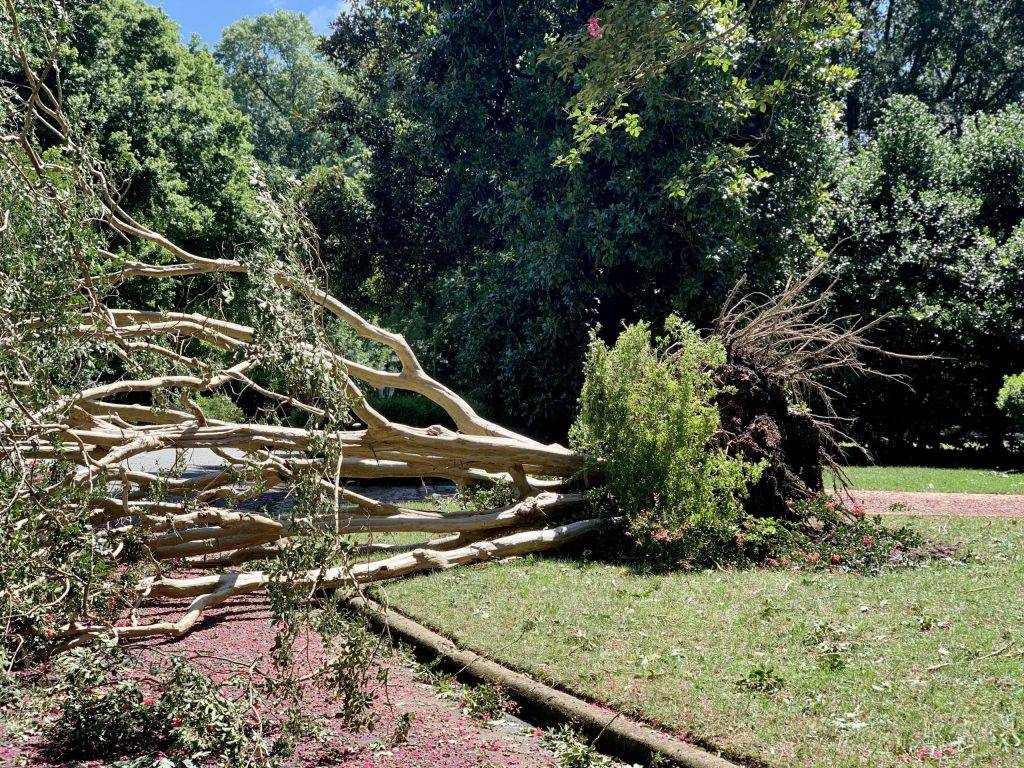
- Emergency or storm work — After-hours and post-storm jobs cost more; see emergency tree removal cost.
- Stump removal — Grinding or pulling the stump is almost always a separate charge.
- Permits — Some cities require a permit to remove certain trees, adding time and cost.
Can you cut down a tree yourself to save money?
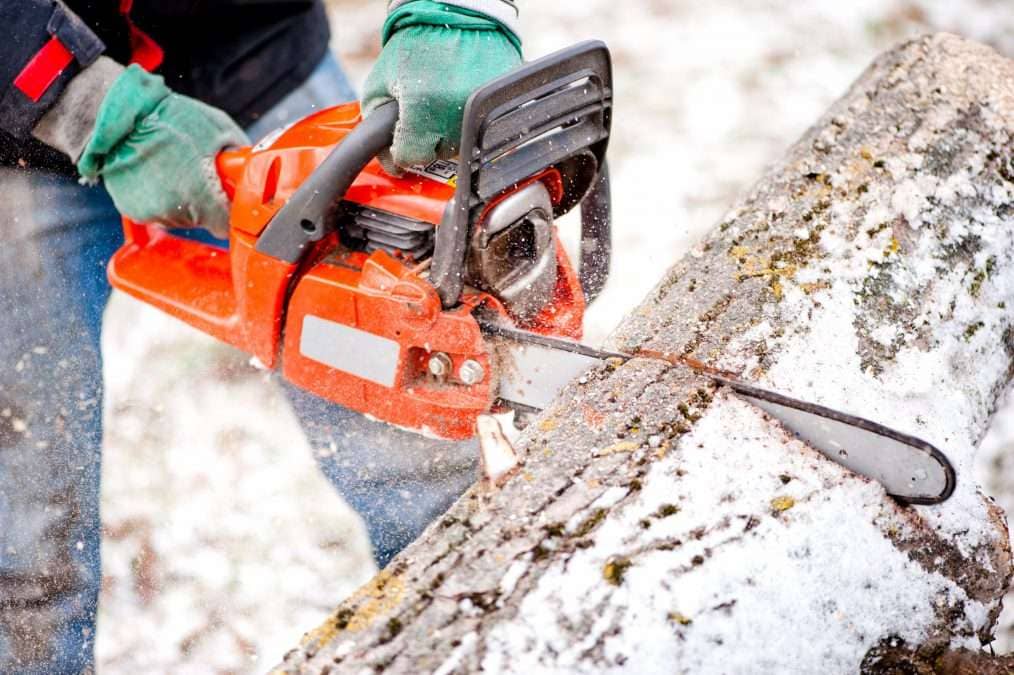
For a small tree under about 20 feet in an open area with nothing valuable nearby, careful DIY removal can save you a few hundred dollars. You will still need a chainsaw, proper safety gear, and a plan for hauling the debris. For anything taller, leaning, near a structure, or close to power lines, hiring a professional is far safer—and often cheaper once you factor in equipment rental, disposal, and the very real risk of property damage or injury.
The International Society of Arboriculture recommends hiring a certified arborist for any tree that requires climbing, cutting above shoulder height, or work near utilities. If you decide to hire out, our guide on how to hire a tree removal company walks through vetting crews and comparing quotes.
Additional costs to budget for
A quote to fell a tree often covers cutting it down and leaving the wood on site. These common add-ons can change your total:
| Add-on service | Typical cost | What it covers |
|---|---|---|
| Stump grinding | $75–$500 | Grinding the stump 4–6 inches below grade |
| Stump removal | $150–$700 | Fully extracting the stump and major roots |
| Debris and log hauling | $50–$150 | Removing cut wood and brush |
| Wood chipping | $75–$125 | Chipping branches on site |
| Permit | $50–$500 | Where required by your city or HOA |
| Travel / lot access | $50–$200 | Rural or hard-to-reach properties |
Stump work is the most common surprise on a final bill. Compare stump removal cost and stump grinding cost before you sign anything.
How to get an accurate quote and keep costs down
- Get at least three written estimates from licensed, insured companies.
- Ask exactly what is included—felling only, or stump, hauling, and cleanup too.
- Bundle multiple trees into one visit to lower the per-tree price.
- Schedule in the off-season (late fall or winter) when crews are less busy.
- Keep the wood for firewood to avoid hauling charges.
- Confirm insurance—ask for proof of liability and workers’ compensation before work begins.
How tree removal companies price the job
Most companies quote a flat per-tree price after seeing the job, but some charge by the hour—typically $100 to $400 per hour per crew, depending on crew size and equipment. Many also have a minimum service fee of about $150 to $350, so removing one very small tree may not be much cheaper than removing two. Bucket trucks, cranes, and stump grinders carry their own equipment fees, which is why an in-person estimate is far more accurate than a phone quote. Hiring a certified arborist for an assessment first can prevent paying for work you do not actually need.
Cost to cut down a tree near a house or power lines
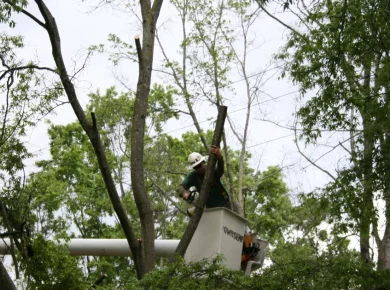
Location on your property matters as much as height. A tree growing close to a house, garage, fence, or deck usually has to be dismantled in sections and lowered with ropes instead of simply felled, which can add 25% to 50% to the price. Trees touching or near utility lines are higher-risk still: the crew may need to coordinate with your utility company, and in some cases the utility handles trimming around its own lines for free. Never attempt removal near energized lines yourself. See our detailed guide to tree removal cost near power lines for what to expect.
Does your location change the price?
Yes. Labor and disposal rates vary widely by region. Homeowners in high-cost metro areas and the Northeast often pay 20% to 40% more than the national average, while rural properties may see travel surcharges because crews drive farther. Storm-prone regions can also see prices spike right after major weather events, when demand for crews surges. Because of this variation, treat any national figure—including the averages on this page—as a starting point, and rely on local written estimates for your actual budget.
Frequently asked questions
Is it cheaper to cut down a tree in winter?
Often, yes. Demand drops in late fall and winter, and bare, frozen ground makes access easier, so many companies offer lower off-season rates.
Does the cost include stump removal?
Usually not. Most quotes cover felling the tree and may leave the stump and wood behind. Stump grinding or removal is typically a separate line item of $75 to $700.
How much does it cost to cut down a large oak tree?
A mature oak of 60 to 80 feet typically costs $800 to $1,500 to remove, and larger or hard-to-reach oaks can exceed $2,000 because the dense hardwood is heavy and slow to cut.
Do I need a permit to cut down a tree on my property?
It depends on your city and the tree. Many municipalities require a permit for protected species or trees above a certain size, even on private property. Check with your local planning department before removal.
Who pays to remove a tree on the property line?
A tree on a shared boundary is generally the joint responsibility of both neighbors, so the cost is often split. See our guide on how to split tree removal cost with a neighbor.
How long does it take to cut down a tree?
A small, accessible tree can be down in under an hour, while a large tree near structures may take a full day for a crew once rigging, cutting, and cleanup are included. Stump grinding adds extra time.
What is the cheapest way to get a tree removed?
Get several quotes, bundle multiple trees into one visit, keep the wood for firewood, skip stump grinding if you can live with the stump, and schedule during the slower late-fall or winter season.
Is cutting down a tree covered by homeowners insurance?
Insurance usually pays only when a tree falls and damages a covered structure, not for routine or preventive removal. Removing a healthy tree for aesthetics or convenience is almost always an out-of-pocket cost.
For rental or storm-related situations, it is worth checking whether tree removal is tax deductible before you file.
Disclaimer: The prices above are 2026 national estimates and will vary by region, season, and the specifics of your tree. Permit and tree-protection rules differ by city and state—always confirm local requirements before removing a tree.

 Jack Turner