
Tree removal cost typically ranges from $200 to $2,000 in 2026, and most homeowners pay around $750 to $1,200 to remove an average-sized tree. The single biggest price driver is size: a small tree under 30 feet often costs $150–$500, a medium tree of 30–60 feet runs about $500–$1,200, and a large tree over 60 feet can cost $1,500–$4,000 or more. Species, location, tree health, and how easy the tree is to reach all push the final number up or down.
Removing a dead tree specifically? See our dead tree removal cost guide for prices by size and why brittle wood costs more.
Want the short answer first? See our quick guide on how much it costs to cut down a tree, broken down by size.
Below you’ll find what to expect by size, species, and job type, the factors that move the price, and the add-on services—like stump grinding, debris hauling, and emergency work—that often aren’t part of the base quote. All figures are national ranges and vary widely by region, so always get written estimates from local, insured tree services before you budget.
How much does tree removal cost?
The national average for professional tree removal is roughly $850 to $900, with a normal range of about $200 to $2,000. Simple, small jobs can land near $150–$300, while large, hazardous, or hard-to-reach trees that need a crane can climb to $3,000–$5,000 or more. Priced another way, removal often works out to about $10 to $14 per foot of tree height, and up to $25 per foot in difficult conditions.
| Job type | Typical cost range |
|---|---|
| Small tree (under 30 ft) | $150 – $500 |
| Average residential tree | $750 – $1,200 |
| Large tree (60 ft+) | $1,500 – $4,000 |
| Complex / crane-assisted removal | $3,000 – $5,000+ |
| Stump grinding (add-on) | $100 – $400 |
Tree removal cost by size
Size is the number-one cost factor because a taller, heavier tree takes more time, labor, and equipment to take down safely. Trunk diameter matters as much as height—a thick, dense trunk can require a crane even on a shorter tree. Use the ranges below as a starting point, then confirm with a local quote.
| Tree size | Approx. height | Typical cost |
|---|---|---|
| Small | Under 30 ft | $150 – $500 |
| Medium | 30 – 60 ft | $500 – $1,200 |
| Large | 60 – 80 ft | $1,200 – $2,500 |
| Very large | 80 ft+ | $1,500 – $4,000+ |
For a deeper breakdown of bigger jobs, see our guide on the cost to remove a large tree, or the general overview of how much it costs to cut down a tree.
Tree removal cost by tree type
Species affects price through wood density, branch structure, and typical mature size. Hardwoods like oak are heavier and slower to cut; lighter trees like palms are usually cheaper to take down.
| Tree type | Typical removal cost | Why |
|---|---|---|
| Palm | $200 – $900 | Light, simple structure |
| Pine | $475 – $1,500 | Tall but often straightforward |
| Maple | $1,000 – $2,500 | Large canopy, dense wood |
| Oak | $700 – $3,000+ | Heavy, dense, wide branching |
| Ash / large hardwoods | $1,000 – $3,000 | Dense wood, often near structures |
What affects tree removal cost?
Two trees of the same height can be priced very differently. The main factors crews weigh when quoting are:
- Size and trunk diameter — taller and thicker means more labor and bigger equipment.
- Accessibility — a tree in an open field is far cheaper than one wedged behind a fence or pool.
- Proximity to structures and power lines — trees over a house, garage, or utility lines require rigging or a crane.
- Species and wood density — heavier wood is slower and harder to cut and haul.
- Tree health and condition — dead or unstable trees can be more dangerous (and sometimes pricier) to handle.
- Travel distance — many companies add a fee of $50–$200 if you’re outside their normal service area.
- Local rates and permits — labor costs and permit rules vary by city and state.
The base quote usually covers felling the tree and basic cleanup. These common extras are billed separately, so ask what’s included before you sign.
| Add-on service | Typical cost |
|---|---|
| Stump grinding | $100 – $400 per stump |
| Full stump removal (roots) | $150 – $1,000+ |
| Log splitting / hauling debris | $50 – $150+ |
| Travel fee | $50 – $200 |
| Tree removal permit | $45 – $200 |
| Emergency / storm response | +20% – 50% over standard |
| Crane-assisted removal | $500 – $2,000+ added |
Some cities require a permit before removing certain trees. If that applies to you, read whether you need a permit to cut down a tree first to avoid fines.
Cost by tree condition and situation
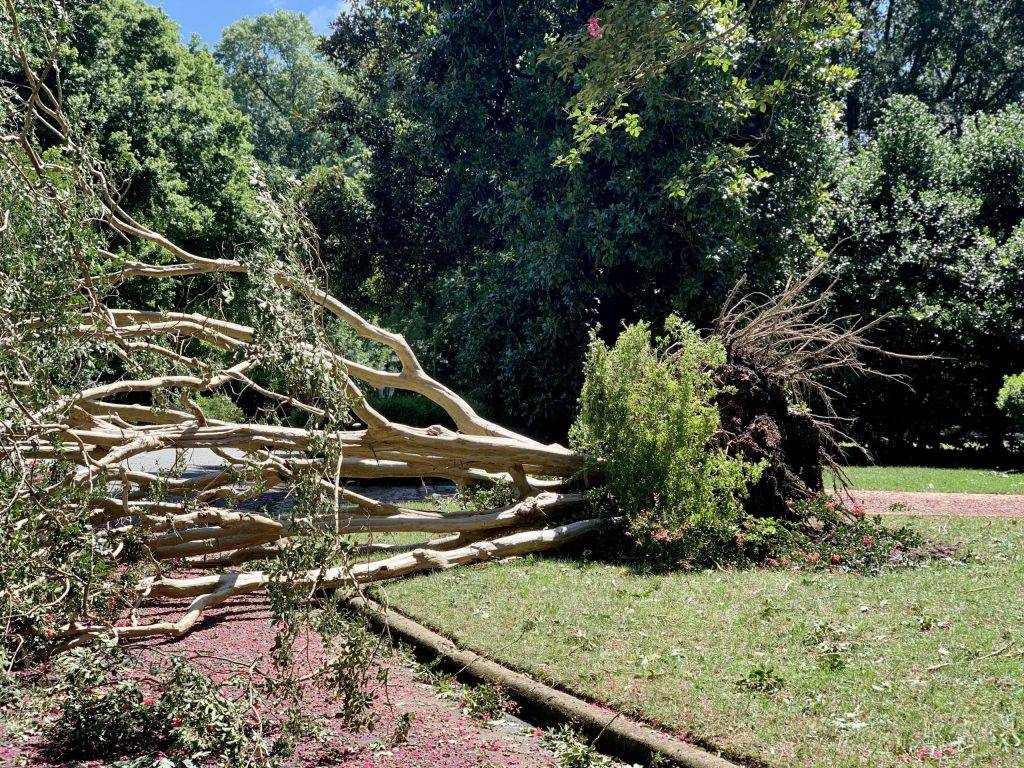
The reason for removal changes the price. A dead or diseased tree can sometimes be cheaper to fell but riskier to handle, so brittle limbs may require extra rigging. A fallen tree after a storm is often quoted as emergency work at a 20–50% premium. A leaning tree near a home or fence usually needs careful, sectioned takedown, which raises labor. Trees close to a house or over power lines almost always cost more because of the equipment and care involved.
DIY vs. hiring a professional
For a small, healthy tree well away from structures and lines, a careful DIY removal can save money. For anything tall, leaning, dead, or near a building, fence, or utility line, hiring a licensed, insured tree service is the safer and often cheaper choice once you factor in equipment rental and risk. The International Society of Arboriculture recommends working with a credentialed professional for hazardous work—see their guidance on hiring an arborist.
Who pays for tree removal?
For a healthy tree on your own property, you generally pay for removal yourself. Homeowners insurance usually does not cover routine or preventive removal, but it may cover removal when a tree falls and damages a covered structure (like your roof or fence), typically up to a set limit and minus your deductible. Coverage varies by policy, so confirm with your insurer—our overview of whether damaged trees are covered by insurance walks through common scenarios.
When a tree sits on or near a property line, responsibility depends on where the trunk stands and the laws in your state. If a neighbor’s tree falls into your yard, see who pays for fallen tree removal.
Wondering whether you can write off the expense? See our guide on whether tree removal is tax deductible.
Disclaimer: This article is general information, not legal, financial, or insurance advice. Tree laws, permit rules, and insurance coverage vary by state and policy—consult your local government, a licensed arborist, and your insurer for your specific situation.
How to save money and get accurate quotes
- Get at least three written estimates from local, insured companies—prices vary widely.
- Bundle services like stump grinding and hauling into one job for a better rate.
- Schedule in the off-season (late fall or winter) when crews are less busy.
- Keep the wood or mulch to skip hauling fees if you can use it.
- Confirm insurance and credentials before work begins, and get the full scope in writing.
Frequently asked questions
What is the average cost to remove a tree?
The average cost to remove a tree in 2026 is about $850 to $900, with most jobs falling between $200 and $2,000 depending on size, species, and location.
Why is tree removal so expensive?
Tree removal is labor-intensive and high-risk. Tall or heavy trees near homes and power lines require trained crews, rigging, and sometimes a crane, plus insurance and cleanup—all of which add to the price.
Does homeowners insurance pay for tree removal?
Usually only when a tree falls and damages a covered structure. Routine or preventive removal of a healthy tree is typically not covered. Check your policy limits and deductible.
How much does it cost to remove a tree and the stump?
Add roughly $100–$400 for stump grinding, or $150–$1,000+ for full stump-and-root removal, on top of the tree removal price.
What is the cheapest time of year to remove a tree?
Late fall and winter are often cheaper because demand is lower and bare branches make the work faster.
Tip: Get a quick estimate for your specific tree with our free tree removal cost calculator.
Written by Jack Turner, the Neighbor Cut My Tree team’s arborist and mediation writer. We focus on clear, people-first answers to tree cost, care, and neighbor questions.
\n
Before you commit, gather and compare bids the right way—see our guide to getting a tree removal estimate and what a written quote should include.
Before booking a removal, check whether pruning would do the job — see tree removal vs trimming.


 Jack Turner