
Willow tree removal typically costs between $400 and $2,000, with most homeowners paying around $700 to $1,200 for an average weeping willow. Small willows under 30 feet can cost $300 to $600, while a large, mature willow of 70 feet or more can reach $1,500 to $3,000 or higher. The final price depends on the tree’s size, its sprawling canopy, and how close it sits to water, pipes, or structures.
Willows come with two quirks that push cleanup costs above many other shade trees: their wood is weak and breaks easily, creating heavy debris, and their roots are among the most aggressive and water-seeking of any common tree. Both add labor to a removal. For the bigger picture on tree work pricing, start with our complete tree removal cost guide.
How much does willow tree removal cost?
The average cost to remove a willow tree is about $700 to $1,200, with the full range running from roughly $300 for a small, easy-access tree to $3,000+ for a very large or hazardous one. Willows grow fast and wide, so a tree that looks moderate can still carry a large, heavy canopy that takes extra time to dismantle and haul. Prices vary by region, tree condition, and access, so get two or three written estimates.
Willow tree removal cost by size
Size is the biggest driver of price. The table below shows typical 2026 ranges for a standard willow in good access conditions; trees near water, over structures, or storm-damaged fall at the higher end.
| Willow size | Approx. height | Typical removal cost |
|---|---|---|
| Small | Under 30 ft | $300 – $600 |
| Medium | 30 – 50 ft | $500 – $1,200 |
| Large | 50 – 70 ft | $1,000 – $2,000 |
| Very large / mature | 70 ft and up | $1,500 – $3,000+ |
For how height and trunk width affect any species, see tree removal cost by size, or estimate your own tree with the tree removal cost calculator.
What affects willow tree removal cost?
- Size and canopy spread: Willows carry a wide, drooping canopy, so even a medium tree produces a lot of brush to cut and chip.
- Proximity to water: Willows are often planted beside ponds, ditches, or low, wet ground, which can make it harder to bring equipment close.
- Roots near pipes and structures: Willow roots seek water and can wrap around septic systems, drains, and foundations, adding to stump and root removal work.
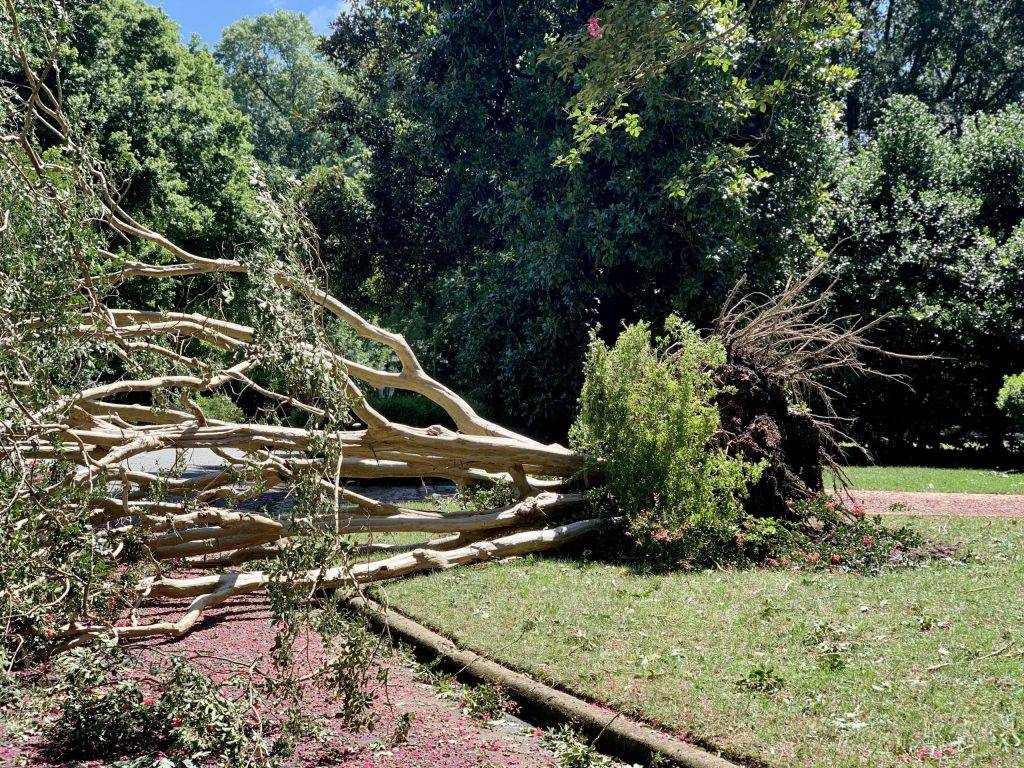
- Storm damage: Weak willow wood breaks in wind and ice, so many removals happen after limbs or the trunk have already failed.
- Access and location: Backyard trees far from the street cost more than those a truck can reach directly.
- Stump grinding: Almost always billed separately from felling the tree.
- Debris hauling: The high brush volume of a willow can raise hauling fees unless you keep the wood.
- Permits: Some cities require a permit to remove larger trees, even on private property.
Why willows cost more to clean up: weak wood and aggressive roots
Willows are fast-growing but short-lived, and that speed comes at the price of soft, brittle wood. Large limbs snap in storms and even shed on calm days, which is why willows are among the trees most often removed after storm damage. If your willow has already dropped major limbs, our guide to the cost to remove a fallen tree covers what to expect.
The bigger long-term issue is the root system. Willow roots are shallow, wide-ranging, and strongly drawn to moisture, so they routinely invade sewer and septic lines, lift patios, and crowd foundations. That is a common reason homeowners remove an otherwise healthy willow. If you are dealing with roots in your plumbing, see tree roots in a sewer line. Because willow roots spread so far, fully removing them can add to your grinding and cleanup bill.
Stump grinding and root removal costs
Grinding a willow stump usually costs $100 to $400, or about $2 to $5 per inch of stump diameter. Willows often have wide, multi-stemmed bases, so grinding can land at the higher end. If roots have reached pipes or hardscape, expect extra charges for tracing and removing them.
| Add-on service | Typical cost |
|---|---|
| Stump grinding | $100 – $400 |
| Full stump and surface root removal | $150 – $600+ |
| Log and brush hauling | $50 – $150 |
| Permit (where required) | $0 – $150+ |
See stump grinding cost and stump removal cost for full breakdowns.
Removal vs. heavy pruning: can you avoid it?
If a willow is still healthy and well away from pipes and buildings, regular pruning can extend its life and reduce storm breakage at a fraction of removal cost. But once a willow is repeatedly dropping large limbs, its roots are damaging structures, or the trunk is decaying, removal is usually the safer and cheaper path over time. A certified arborist can tell you which situation you are in; the International Society of Arboriculture and the Arbor Day Foundation both offer guidance on when a tree is worth keeping.
How to save money on willow tree removal
- Get multiple written quotes. Willow prices vary widely because canopy size and access differ so much.
- Bundle stump grinding. Adding it to the same visit is cheaper than a separate trip.
- Keep the wood and chips. This can cut hauling fees.
- Act before a storm forces the issue. Emergency removal of a failed willow costs more than a scheduled job.
- Schedule in the off-season. Late fall and winter are often slower and cheaper for crews.
Frequently asked questions
Why are willow trees expensive to remove?
Willows carry a wide, heavy canopy that produces a lot of brush, and their soft wood and far-reaching roots add cleanup work. Many also sit near water or over pipes, which complicates access and stump removal.
How much does it cost to remove a weeping willow?
A typical weeping willow costs about $500 to $1,200 to remove, with small trees near $300 to $600 and very large ones reaching $1,500 to $3,000 or more depending on size and access.
Do willow roots really damage pipes and foundations?
Yes. Willow roots are shallow, wide, and strongly drawn to moisture, so they commonly invade sewer and septic lines and can lift patios or crowd foundations. This is a frequent reason homeowners remove them.
Is it cheaper to prune a willow than remove it?
In the short term, yes, if the tree is healthy. Pruning costs far less than removal, but once a willow is decaying, damaging structures, or dropping large limbs, removal is usually cheaper and safer over time.
Does insurance cover willow tree removal?
Insurance generally does not pay to remove a standing willow for maintenance reasons. Coverage typically applies only when a tree falls and damages an insured structure. Policies vary, so check your coverage.
Cost figures here are general 2026 estimates and will vary by region, tree condition, and access. Always get written quotes from licensed, insured tree services for your specific situation.


 Jack Turner