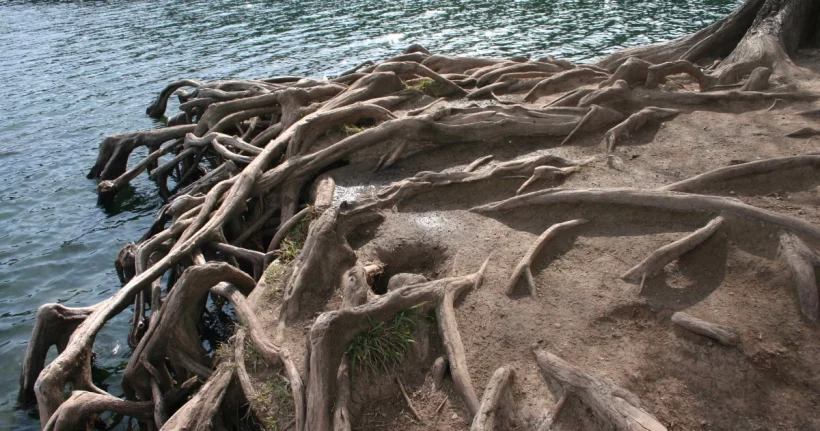

Tree roots in a sewer line are one of the most common causes of recurring drain clogs and sewage backups in older homes. Roots sense the moisture and nutrients leaking from tiny cracks or loose joints in a buried pipe, then grow through those openings and spread into a dense mat that traps waste and slows or stops the flow. The good news: most root intrusions can be cleared for a few hundred dollars, and regrowth can be held off for years with the right follow-up.
This guide explains how to spot the problem early, what removal and repair typically cost in 2026, the DIY and professional options that actually work, and how to keep roots out of your pipes for good. Costs and legal responsibility vary by location, so treat the figures here as general ranges rather than a quote.
Signs of tree roots in your sewer line
The earliest warning sign is usually a slow drain that affects more than one fixture. Because a sewer line carries waste from the whole house, root intrusion rarely shows up in just one sink. Watch for these symptoms, roughly in the order they tend to appear:
- Gurgling toilets or drains — air trapped behind a partial root blockage bubbles back up.
- Multiple slow drains — tubs, toilets, and sinks all draining sluggishly at once.
- Sewage odors near floor drains, the yard, or the lowest fixtures in the house.
- Frequent or repeating backups, especially in a basement floor drain or ground-floor toilet.
- Soft, soggy, or unusually green patches in the lawn following the line’s path — leaking nutrients fertilize the grass above.
- Sinkholes or sunken spots in the yard, a sign of soil washing into a damaged pipe.
A single slow drain is more likely a local clog. When several fixtures act up together — or backups keep returning weeks after you clear them — roots in the main line are the prime suspect.
Why roots get into sewer pipes
Roots do not “attack” sound, sealed pipes. They follow water. A buried sewer line carries warm, nutrient-rich moisture, and even a hairline crack or a slightly loose joint releases vapor into the surrounding soil. Roots growing nearby detect that vapor and grow toward it, eventually pushing fine root hairs through the opening. Once inside the warm, wet pipe, they expand rapidly into a thick mat.
Older homes are most at risk. Clay tile and “Orangeburg” (tar-paper) pipes installed before the 1980s have many joints and degrade over time, giving roots countless entry points. Modern PVC lines with sealed joints are far more resistant but not immune, especially where ground movement has cracked a section.
Tree roots in sewer line removal cost (2026)
Clearing roots from a sewer line typically costs $100 to $600 for a routine cleaning, while repairing or replacing the damaged pipe runs from roughly $700 into the low thousands. What you pay depends on how severe the intrusion is and whether the pipe itself needs work. The table below shows typical 2026 ranges; actual prices vary by region, pipe depth, and access.
| Service | What it does | Typical cost range |
|---|---|---|
| Sewer camera inspection | Locates and confirms the root intrusion | $100 – $500 |
| Mechanical snaking / root cutter | Cuts roots out of the line | $100 – $600 |
| Hydro jetting | High-pressure water scours roots and debris from pipe walls | $300 – $900 |
| Foaming root-killer treatment | Kills roots and slows regrowth | $20 – $100 (DIY) / $100 – $300 (pro) |
| Pipe lining (trenchless relining) | Seals a new pipe inside the old one | $2,000 – $6,000+ |
| Sewer line replacement (dig & replace) | Removes and replaces the damaged section | $3,000 – $7,000+ |
For a recurring problem, a plumber will often pair mechanical cutting or hydro jetting with a foaming treatment, then recommend a camera inspection to decide whether the pipe can keep being maintained or needs relining. If you are weighing whether to remove the offending tree as part of the fix, see our guide to tree removal cost by size and job.
How to get tree roots out of a sewer line
Removal options fall into two groups: things a homeowner can try, and jobs that need a professional. Start with the least invasive approach that fits the severity of the clog.
DIY methods (light intrusions)
- Foaming root killers: Foaming products (many use dichlobenil or a copper-sulfate-free formula) coat the pipe walls, kill roots on contact, and slow regrowth. They work best as maintenance on a line that has already been mechanically cleared, not as a fix for a full blockage.
- Rock salt or copper sulfate: Flushed down the toilet, these draw moisture from roots and kill the ones they reach. Use sparingly — copper sulfate can corrode metal pipes and harm septic bacteria — and check local rules, since some areas restrict it.
- Hot water and an enzyme cleaner: Helps with minor buildup but will not cut through an established root mat.
DIY chemical treatments only reach the roots inside the pipe; they do not repair the crack that let roots in, so the intrusion will return without follow-up.
Professional methods (moderate to severe)
- Mechanical snaking with a root-cutting head: A cable with a rotating blade shears roots off at the pipe wall. Fast and affordable, and the standard first response.
- Hydro jetting: A high-pressure water nozzle scours the full pipe diameter, removing roots and the grease and scale they cling to. More thorough than snaking.
- Pipe lining (relining): A resin-coated liner is inserted and cured inside the old pipe, creating a seamless new wall that roots cannot penetrate — without digging up the yard.
- Excavation and replacement: For collapsed or badly crushed pipe, the section is dug up and replaced. The most expensive option, reserved for severe damage.
A licensed plumber should run a camera inspection before any major repair so you pay to fix the actual problem, not guess at it. If the tree responsible is in poor health or too close to the house, a certified arborist can assess whether it should be removed.
Who is responsible for the repair?
In most U.S. municipalities the property owner is responsible for the sewer lateral — the pipe running from the house to the public main — even where it passes under the street or sidewalk. The city or utility typically maintains only the main itself. That means root damage to your lateral is usually your cost, even if the roots come from a tree on a neighbor’s property or the public right-of-way.
Rules vary widely by city, so confirm with your local water or sewer authority before assuming who pays. If the roots originate from a neighbor’s tree, liability for the tree itself depends on state law and whether the owner was negligent — and these disputes are often resolved by sharing costs. Our guide on how to split tree-removal cost with a neighbor covers how to approach that conversation.
This article is general information, not legal advice. Responsibility for sewer laterals and tree-related damage varies by state and municipality — check your local ordinances or consult a professional for your situation.
How to prevent roots from coming back
Clearing roots is temporary; keeping them out is the real fix. Combine these measures for the best results:
- Plant trees at least 10 feet from the sewer line — more for large, fast-growing species. Locate the line first so you know where it runs.
- Choose sewer-safe species with slower, more manageable roots, such as flowering dogwood, Eastern redbud, Japanese maple, paperbark and Amur maple, or cypress.
- Install a root barrier — a physical or chemical barrier set vertically in the soil that redirects root growth away from the pipe.
- Apply a foaming root treatment once a year on a line with a history of intrusion to suppress regrowth.
- Reline or repair aging clay or Orangeburg pipe to eliminate the cracks and joints roots exploit in the first place.
- Schedule periodic camera inspections (every 1–2 years on a problem line) to catch new intrusion before it backs up.
Sewer-safe vs. high-risk trees
If you are planting near a known line, species choice matters as much as distance. The table below groups common trees by relative root risk near sewer pipes.
| Lower-risk (sewer-friendlier) | Higher-risk (aggressive roots) |
|---|---|
| Flowering dogwood | Willow |
| Eastern redbud | Silver maple |
| Japanese / Amur / paperbark maple | Poplar & cottonwood |
| Cypress | American elm |
| Crape myrtle | Oak (large species) |
No tree is guaranteed safe next to a cracked pipe, but pairing a lower-risk species with proper distance and a root barrier dramatically reduces the odds of intrusion. The International Society of Arboriculture recommends matching the right tree to the planting site to avoid future conflicts with structures and utilities.
Related reading: to prevent roots from returning to the line — see how to stop tree roots from growing safely.
Roots damage hardscape too — here’s what to do about tree roots lifting a driveway.
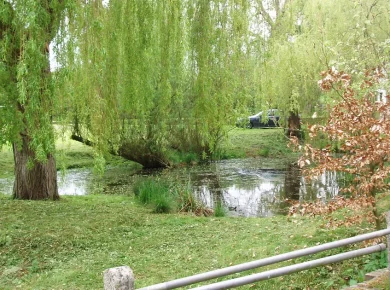
Willow roots are a frequent culprit here — see willow tree removal cost if you are considering removing the tree.
Frequently asked questions
Can tree roots grow back after they’re removed?
Yes. Mechanical cutting and chemical treatments kill the roots they reach but leave the pipe opening intact, so roots usually return within months to a couple of years. An annual foaming treatment can hold regrowth back for about 12 months at a time, while relining or replacing the pipe is the only permanent fix.
Will root killer alone clear a blocked sewer line?
Not usually. Foaming root killers are best for maintenance and prevention after the line has been mechanically cleared. A pipe that is already fully blocked needs a root cutter or hydro jetting first; chemicals work too slowly to relieve an active backup.
Do I have to remove the tree to fix the problem?
Often not. Relining the pipe or installing a root barrier usually solves the intrusion without removing a healthy tree. Removal is worth considering only when the tree is unhealthy, hazardous, very close to the line, or a repeat offender despite barriers and relining.
How do I know if it’s roots or just a regular clog?
A regular clog tends to affect one fixture and clears with a plunger or short snaking. Root intrusion affects multiple fixtures, returns repeatedly, and is confirmed by a sewer camera inspection — the only way to see exactly what’s in the pipe and where.
Does homeowners insurance cover tree roots in the sewer line?
Usually no. Most standard policies treat root intrusion as a maintenance issue rather than sudden accidental damage, so the cleaning and repair fall to the homeowner. Some insurers offer a separate service-line endorsement that may help — check your policy before you need it.
Root problems rarely stop at the pipe. If you are also seeing cracks, sticking doors or uneven floors, read our guide to tree roots damaging a foundation.


 Jack Turner