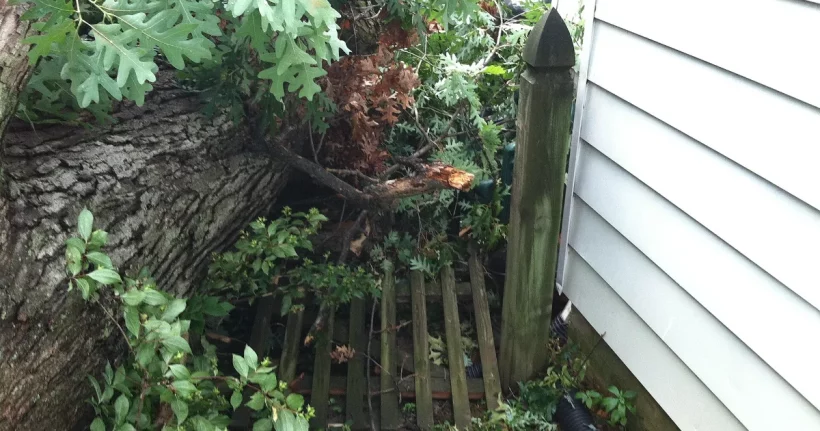

A tree damage demand letter is a formal written request asking the person responsible for damaging your tree, or whose tree damaged your property, to pay for your loss. It lays out what happened, why they are liable, an itemized dollar amount, and a deadline to respond, and it is the standard step you take before filing in small claims court. A clear, documented demand often settles the matter without a lawsuit, and if it does not, it becomes evidence that you tried to resolve things reasonably.
This guide explains what you can demand, what to gather first, and exactly what to put in the letter, and it includes a free fill-in-the-blank template you can adapt.
What is a tree damage demand letter, and when should you send one?
Use a demand letter whenever a tree has caused a loss and the responsible party has not offered to make it right. Two common situations trigger one:
- Someone damaged your tree. A neighbor, contractor, or utility crew cut, over-trimmed, poisoned, or removed your tree without permission. If a neighbor cut it, our guide on what to do when a neighbor cuts your tree covers the background.
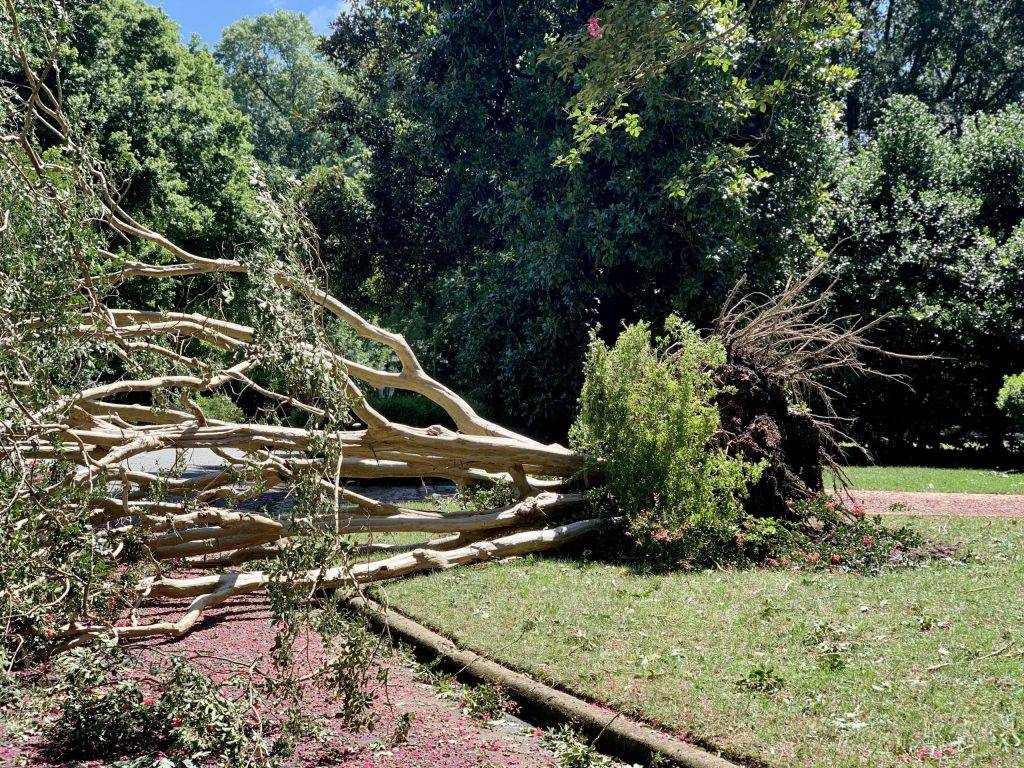
- A neighbor’s tree damaged your property. Their tree or a limb fell on your fence, roof, or car, and the facts suggest they were negligent, for example, the tree was visibly dead and they ignored it. See what to do when a neighbor’s tree falls on your fence.
Send the letter once you have documented the damage and gathered at least one repair or replacement estimate. Sending it too early, before you can put a number on the loss, weakens your position.
What you can demand payment for
You can generally recover the actual loss the damage caused. Depending on the facts and your state’s law, that can include several categories:
| Damage category | What it covers |
|---|---|
| Replacement or repair cost | The cost to replace the tree or repair the damaged fence, roof, vehicle, or driveway, including cleanup and debris removal. |
| Diminished property value | If a mature tree cannot be replaced, the drop in your property’s value from losing it. |
| Out-of-pocket expenses | Money reasonably spent to save an injured tree, an arborist report or appraisal, yard repair, and related costs. |
| Statutory multiplied damages | Many states let a court award two or three times the tree’s value when the cutting was intentional or negligent. This varies widely by state. |
That last row is worth emphasizing. A number of states have “timber trespass” or wrongful-tree-cutting statutes that allow double or triple damages for cutting someone’s tree without permission. Whether it applies, and the exact multiplier, depends entirely on your state, so describe your actual loss accurately and mention that you reserve the right to pursue any additional damages the law allows rather than inventing a figure.
What to gather before you write
The strength of a demand letter comes from evidence, not adjectives. Before you write, collect:
- Photos and video of the damage from several angles, ideally with timestamps.
- Dates and a short timeline of what happened and any prior warnings you gave (for example, if you told the neighbor the tree looked dead).
- Written estimates or invoices for repair or replacement, and a professional tree appraisal if a mature tree was lost.
- Proof of ownership or the property line if there is any question about whose tree it was.
- Any insurance correspondence, since a partial insurance payout usually has to be subtracted from what you demand.
What to include in the letter
A demand letter should be firm, factual, and free of insults. Include, in order:
- Your details and theirs. Your full name and address, the recipient’s name and address, and the date.
- A clear opening. One sentence stating you are making a formal demand for compensation for tree damage.
- The facts. What was damaged, where, and when, in plain chronological order.
- The basis for liability. Briefly, why they are responsible, for example, they cut your tree without permission, or they ignored a known-dead tree that then fell.
- An itemized demand. Each cost with a dollar figure, adding up to a clear total, backed by your attached estimates.
- A deadline. A reasonable window to respond or pay, commonly 14 to 30 days.
- The consequence. A calm statement that you will pursue small claims court if the matter is not resolved by the deadline.
- Attachments. Copies (never originals) of photos, estimates, and any appraisal.
If your goal is resolution rather than compensation for damage already done, a softer letter to your neighbor about a tree or a request to split a tree removal cost may be the better first step.
Free tree damage demand letter template
Copy the template below and replace the bracketed prompts with your details. Keep the tone professional.
[Your Full Name][Your Address][City, State, ZIP][Date] [Neighbor’s Full Name][Neighbor’s Address][City, State, ZIP]
Re: Formal Demand for Compensation for Tree Damage
Dear [Neighbor’s Name],
I am writing to make a formal demand for compensation for damage to my property that occurred on [date]. Specifically, [briefly describe what happened, e.g., “a large limb from your oak tree fell and destroyed approximately 30 feet of my fence” or “your contractor cut down my maple tree at [address] without my permission”].
I believe you are responsible for this damage because [state the basis, e.g., “the tree had been visibly dead for months and I notified you of the hazard on [date]” or “the tree was located entirely on my property and no permission was given to remove it”].
As a result, I have incurred the following costs:
• [Repair/replacement item] — $[amount]
• [Cleanup/debris removal] — $[amount]
• [Arborist report/appraisal] — $[amount]
Total demanded: $[total]
Copies of photographs and written estimates supporting these amounts are enclosed. I request payment of the total above within [14/30] days of the date of this letter. If I do not receive payment or a good-faith response by [deadline date], I intend to pursue this matter in small claims court, and I reserve the right to seek any additional damages allowed under [state] law.
I would prefer to resolve this fairly and without litigation, and I am open to discussing it. Please contact me at [phone/email].
Sincerely,
[Your Name]
How to send it and what happens next
Send the letter by certified mail with return receipt requested, and keep a copy of the letter and the mailing receipt. The return receipt proves the recipient got it and when, which matters if you later have to show a judge that the owner was on notice. If you have the neighbor’s email, a courteous follow-up copy is fine, but the certified paper copy is what counts.
After you send it, expect one of three outcomes: they pay or negotiate, they route it to their homeowner’s insurance, or they ignore you. If the deadline passes with no resolution, your next step is usually small claims court, where the documentation you assembled does most of the work. Because tree-damage claims can involve the question of when you can sue a neighbor over a tree, review your state’s rules on liability and filing limits before you file.
Frequently asked questions
Do I need a lawyer to send a tree damage demand letter?
No. Most homeowners write their own for small-claims-sized disputes. A lawyer becomes worthwhile when the damage is large, a statute allowing double or triple damages may apply, or the other side has already lawyered up.
How much can I ask for?
Ask for your documented actual loss: replacement or repair cost, cleanup, appraisal, and related out-of-pocket expenses. Do not inflate the number. If your state allows multiplied damages for wrongful cutting, note that you reserve that right rather than guessing at the figure.
How long should I give them to respond?
Fourteen to thirty days is standard. It is long enough to be reasonable and short enough to signal you are serious.
What if they ignore the letter?
File in small claims court. Your certified-mail receipt shows they were notified, and your photos and estimates become your evidence.
Disclaimer: This article is general information, not legal advice, and the template is a starting point rather than a court document. Tree-damage and property laws, including any multiplied-damages statutes and small-claims limits, vary by state. For a specific dispute, consult a licensed attorney in your state.


 Jack Turner