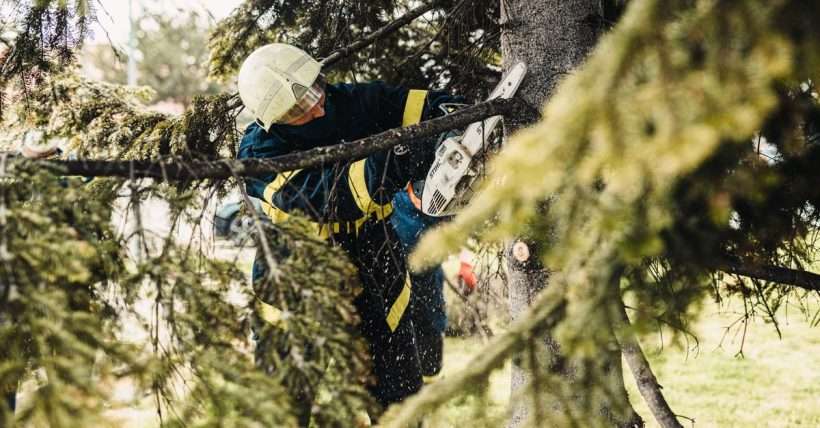

Getting a neighbor to pay for tree removal comes down to one question: was the tree theirs, and were they at fault? If a healthy tree on their land is simply inconvenient to you, you usually cannot force them to remove it or pay. But if their tree was dead or dangerous and damaged your property, if it is a shared boundary tree, or if they damaged a tree of yours, you have real leverage — and often a legal right to recover costs. This guide walks through when a neighbor is responsible, how to ask the right way, and what to do if they refuse.
When a conversation is not enough, escalate with a formal demand letter for tree damage.
Who Is Actually Responsible for Removal Costs
Responsibility follows ownership and fault. A tree belongs to whoever owns the land where its trunk emerges from the ground, and that owner is generally responsible for maintaining it. But the owner only has to pay for your costs when their tree caused damage through negligence, or when the tree is jointly owned.
| Situation | Can you make the neighbor pay? |
|---|---|
| Their healthy tree, no damage to you | No — it is their tree to keep |
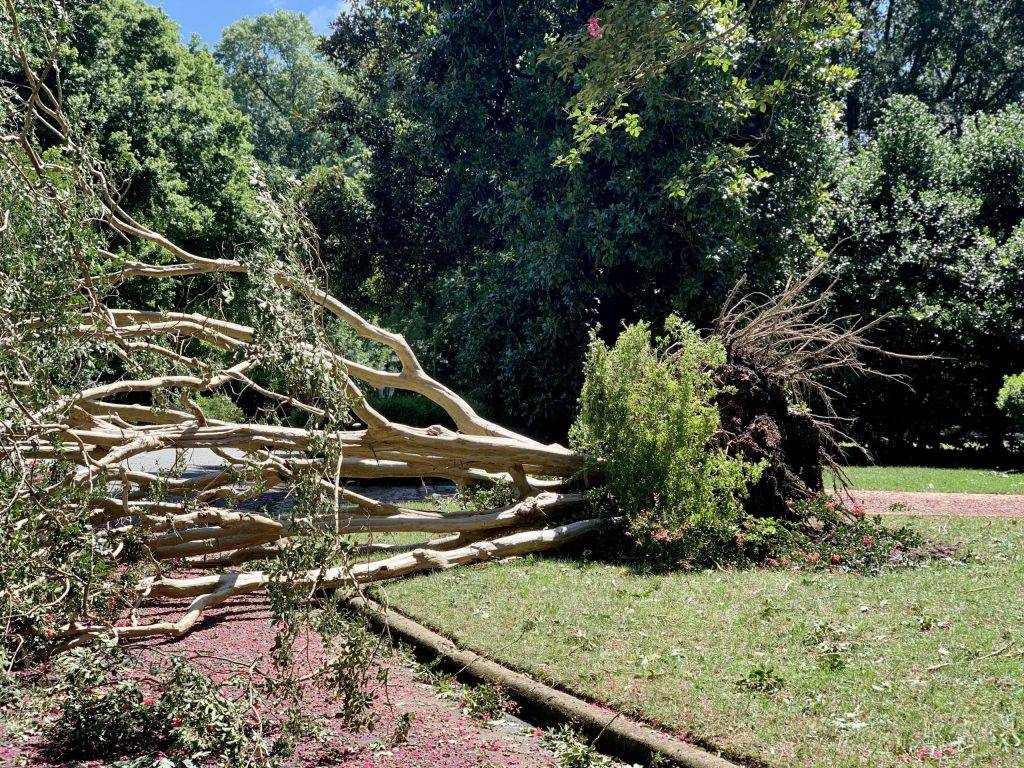
| Their dead/dangerous tree fell on your property | Often yes (negligence) |
| Boundary tree (trunk on the line) | Yes — costs are usually shared |
| Their tree’s branches/roots cross onto your land | You may trim at your own cost |
| They damaged or killed your tree | Yes — they owe you its value |
When You Can Require a Neighbor to Pay
The Tree Was a Known Hazard
If your neighbor’s tree was visibly dead, diseased, or unstable and they were warned but did nothing, they can be liable for the damage and removal costs after it falls. The key is foreseeability — see our guide on what to do about a neighbor’s dangerous tree for how to document the hazard before it becomes a claim.
It Is a Boundary Tree
When a trunk straddles the property line, both owners share ownership and the cost of removal or major work — neither can remove it alone without consent. For the full breakdown of how shared costs work, see resolving tree disputes with neighbors.
How to Ask a Neighbor to Pay — Step by Step
A calm, documented approach gets results far more often than a confrontation. Work through these steps in order.
- Talk first. Raise it in person or by a friendly message, explain the issue, and propose splitting or covering the cost.
- Get quotes. Obtain two or three written removal estimates so the conversation is about real numbers, not guesses.
- Put it in writing. Follow up any verbal agreement with a short email or letter confirming who pays what and by when.
- Send a formal request if they stall — a polite written demand referencing the hazard, the damage, and the estimates. Our encroachment letter to a neighbor is a useful template to adapt.
- Involve insurance where damage already occurred — see what to do when a neighbor’s tree falls on your house.
What to Do If Your Neighbor Refuses
If good-faith requests fail and you have a genuine claim — negligence, a boundary tree, or damage to your property — escalation options include mediation and small claims court.
Mediation
Many communities offer low-cost or free neighbor mediation. It is faster and cheaper than court and preserves the relationship, which matters when you still live next door.
Small Claims Court
For removal or damage costs within your state’s small-claims limit (commonly $5,000–$10,000), you can file without a lawyer. Bring your written warnings, photos, estimates, and any expert (arborist) opinion. Courts apply a “reasonable care” standard, so documentation that the neighbor knew about the hazard is decisive.
Frequently Asked Questions
Can I force my neighbor to remove a healthy tree I dislike?
Generally no. A healthy tree that merely blocks light, drops leaves, or is unattractive is the owner’s to keep. You can usually trim branches and roots that cross onto your property, at your own expense.
My neighbor’s dead tree fell on my fence — do they pay?
Often yes. If the tree was visibly dead or dangerous and they were warned but failed to act, they (or their insurer) can be liable for the damage and removal. Document the tree’s condition and any prior warnings.
Who pays to remove a boundary tree?
Because a boundary tree is jointly owned, removal costs are typically shared between the two owners, and both must consent before it is removed.
Is it worth going to small claims court over tree removal?
If the cost exceeds a few hundred dollars and you have a clear claim with documentation, yes — small claims is inexpensive and designed for exactly these disputes. For weaker claims, mediation is usually the better first step.
This article is general information, not legal advice. Liability and cost-sharing rules vary by state — consult a local attorney for your specific situation.


 Jack Turner