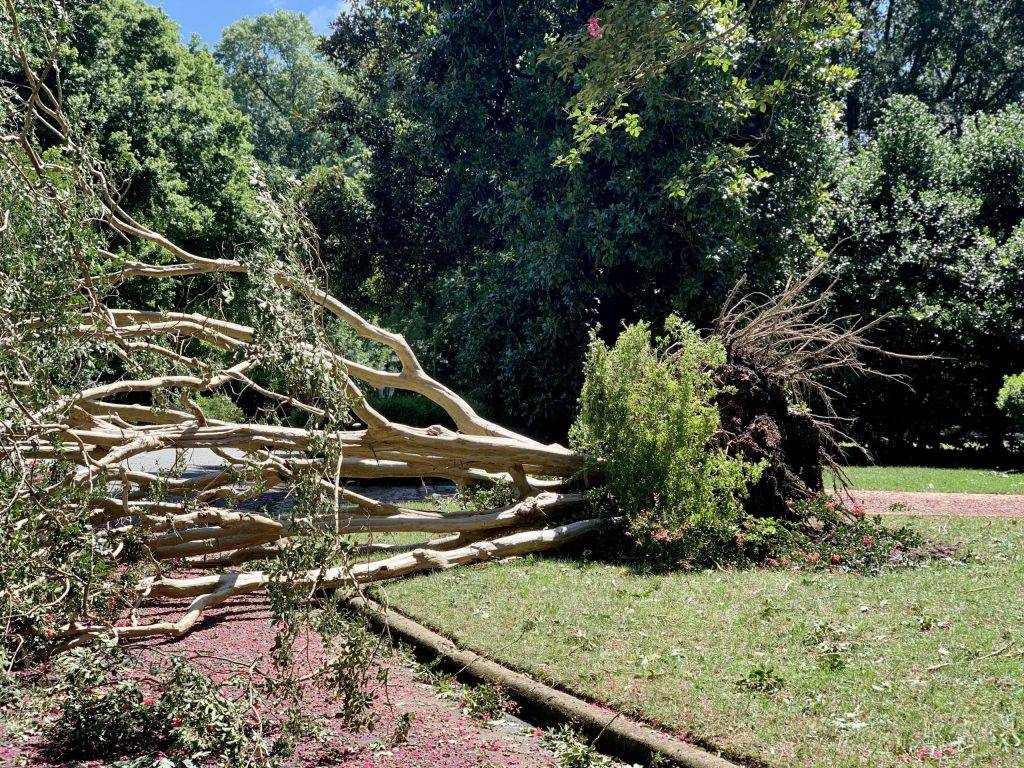

A dead tree on your neighbor’s property is more than an eyesore — it is a falling hazard that can land on your roof, fence, car, or someone standing beneath it. For most homeowners the pressing question is simple: if that tree comes down on your side of the line, who pays?
Short answer: Your neighbor is usually liable only if they knew (or reasonably should have known) the tree was dead or dangerous and failed to act. If a healthy tree falls in a storm, it is typically treated as an “act of God,” and each owner’s own insurance covers their own damage. The deciding factor is notice and negligence — not who owns the trunk.
Who is liable for a dead tree on a neighbor’s property?
Liability for a fallen tree turns on foreseeability. Most U.S. states apply a negligence standard: a tree owner has a duty to take reasonable care of trees they know are hazardous. A visibly dead, diseased, or leaning tree puts the owner “on notice,” so if it fails and causes damage, the owner can be held responsible. A green, healthy tree that topples in a windstorm generally does not create liability, because the owner had no reason to expect it.
Here is how the most common scenarios usually shake out. Laws vary by state, so treat this as a general guide, not legal advice.
| Scenario | Who is typically liable | Whose insurance usually pays |
|---|---|---|
| Healthy tree falls in a storm onto your property | Usually no one (“act of God”) | Your own homeowners insurer |
| Obviously dead tree falls after you warned the neighbor in writing | The neighbor (negligence) | Neighbor’s liability insurer (yours may subrogate) |
| Dead tree falls but no one had noticed the hazard | Usually no liability | Your own homeowners insurer |
| Neighbor’s dead tree damages a shared boundary fence | Often shared, or the negligent owner | Depends on notice and state law |
| Tree service hired by the neighbor drops a tree on your land | The tree service/contractor | Contractor’s liability insurance |
When your neighbor becomes legally responsible
Three elements generally have to line up before a neighbor is on the hook:
- The tree was genuinely hazardous — dead, dying, structurally unsound, or clearly diseased, not simply old or messy.
- The owner had notice — they knew, or a reasonable person inspecting the property would have known. Written warnings from you are powerful evidence of notice.
- They failed to act — a reasonable owner would have removed or remediated the tree within a reasonable time and they did nothing.
Courts also weigh where the property sits. Owners in urban and suburban areas are generally expected to inspect their trees for obvious defects. Owners of large rural or wooded lots historically face a lighter duty, because inspecting every tree is impractical. This urban-versus-rural distinction still shapes many state rulings.
Because notice is everything, documenting the hazard is the single most valuable thing you can do — a paper trail can be the difference between the neighbor’s insurer paying and yours.
What to do about a neighbor’s dead tree before it falls
Do not wait for the tree to come down. Take these steps in order:
- Document the tree. Photograph it from several angles and dates, noting dead limbs, cracks, fungal growth, or lean. If you’re unsure it is truly dead, review the signs a tree is dying.
- Talk to your neighbor first. A calm, friendly conversation resolves most cases — many owners simply haven’t noticed.
- Put your concern in writing. Follow up with a dated letter (keep a copy; certified mail is ideal) stating that the tree appears dead or hazardous and asking them to have it assessed. This creates the legal “notice.” Our letter to a neighbor about a dead tree gives you a template.
- Get an arborist’s opinion. A certified arborist can confirm whether the tree is a genuine hazard and provide a written report — strong evidence if it later fails.
- Contact the city or HOA. Many municipalities have codes covering dangerous trees and some will order removal; an HOA may also have authority.
- Notify your insurer. Give your homeowners insurer a heads-up about the hazard so you’re prepared if it falls.
Can you cut or trim a neighbor’s dead tree?
You generally cannot enter your neighbor’s property or cut down their tree, even a dead one, without permission — doing so can expose you to liability. But most states follow the “self-help” rule: you may trim branches (including dead ones) that overhang your property, cutting back only to the property line, at your own expense.
Two important limits apply: you may not cross the boundary, and you may not cut so aggressively that you kill or destabilize the tree — that can make you liable, sometimes for double or triple the tree’s value under state timber-trespass laws. When in doubt, hire a professional and stay on your side of the line. The same boundary applies below ground when dealing with a neighbor’s tree roots in your yard.
If the dead tree already fell on your property
Work through these steps:
- Ensure safety. Stay clear of downed power lines and call the utility or 911 if any are involved.
- Document everything. Photograph the fallen tree, the damage, and — if visible — the dead or rotted trunk that shows the tree wasn’t healthy.
- Call your own homeowners insurer first. In most cases your policy covers damage to your home, fence, or car from a fallen tree regardless of whose tree it was, minus your deductible.
- Preserve your notice evidence. If you warned the neighbor in writing that the tree was dead, share it — your insurer may pursue the neighbor’s insurer for reimbursement (subrogation), which can recover your deductible.
If the tree hit a boundary fence, see what to do when a neighbor’s tree falls on your fence. If it landed across the property line, our guide on who pays when a property-line tree falls breaks down cost-sharing.
Who pays to remove the dead tree?
Before a tree falls, removing a dead tree on the neighbor’s land is the neighbor’s responsibility and expense — you can’t bill them for a tree you have no right to touch. After a tree falls onto your property, cleanup of the portion on your land is usually your responsibility (and your insurer’s), unless negligence is proven. Costs vary widely by size, access, and region; see our breakdown of dead tree removal cost for current ranges.
Frequently asked questions
My neighbor’s dead tree looks ready to fall. Can I make them remove it?
You can’t remove it yourself, but you can create legal pressure. Document the hazard, send a written request, get an arborist’s report, and report it to your city’s code-enforcement or urban-forestry office. Many municipalities can order an owner to remove a proven dangerous tree.
If a neighbor’s dead tree falls on my house, does my insurance or theirs pay?
Usually yours pays first, then may seek reimbursement from the neighbor’s insurer if you can show the neighbor knew the tree was dead and ignored it. Without that notice, it is typically treated as your loss, minus your deductible.
Do I need to prove the tree was dead before it fell?
To shift liability to the neighbor, yes — evidence that the tree was visibly dead or diseased and that the owner had notice is what establishes negligence. Photos, dated letters, and an arborist report all help.
Can I trim the dead branches hanging over my yard?
In most states, yes — you may trim overhanging branches back to the property line at your own cost, as long as you don’t trespass or kill the tree.
What if the dead tree is on a rental property next door?
Send your written notice to both the tenant and the landlord or owner, since the property owner usually holds the duty to maintain trees. Keep copies of everything.
This article is general information, not legal advice. Tree-liability laws vary by state and locality and change over time. For a specific dispute, consult a local attorney or your insurer.

 Jack Turner