
If your neighbor’s tree roots are in your yard, you generally have the right to cut the roots that cross onto your property—but only up to the property line, and only if you don’t kill or seriously harm the tree. This “self-help” rule applies in most U.S. states, though who pays for any damage the roots cause depends on your state’s law.
Before you grab a saw, it’s worth understanding where your rights end, when a neighbor could hold you liable, and what steps actually solve the problem. This guide covers your legal options, how to cut roots safely, who is responsible for foundation or driveway damage, and how to prevent roots from coming back. This is general information, not legal advice—tree-root laws vary by state.
Can I cut my neighbor’s tree roots in my yard?
Yes. In nearly every state, you have the right to trim neighbor’s tree roots in your yard back to the boundary line, even if the trunk grows on their side. This is called the right of “self-help.” The catch is that your right stops at the property line, and you cannot take action that destroys the tree. If you cut so aggressively that the tree dies or becomes unstable, your neighbor may be able to sue you for the value of the tree.
To stay on the right side of the line, confirm exactly where the boundary is first. Our guide on how to find your property line explains how to locate survey pins before any cutting.
Do’s and don’ts of cutting encroaching roots
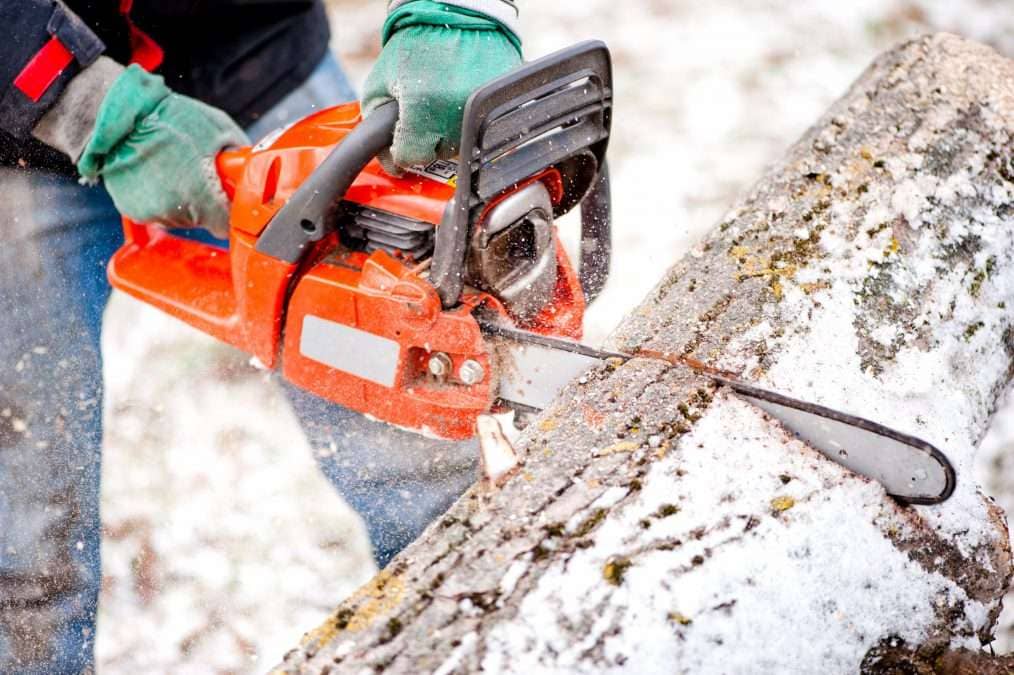
Root pruning can kill a tree if it’s done carelessly, and a dead tree is where liability starts. Follow these safe-practice guidelines:
- Do cut only the roots on your side of the property line.
- Do call 811 before digging to mark underground utilities.
- Don’t apply herbicide or poison to the roots—chemicals can travel to the trunk and kill the whole tree.
- Don’t cut roots close to the trunk. As a rule of thumb, avoid cutting within about 5 feet of a large tree’s trunk, and never remove more than roughly 25% of a tree’s root system.
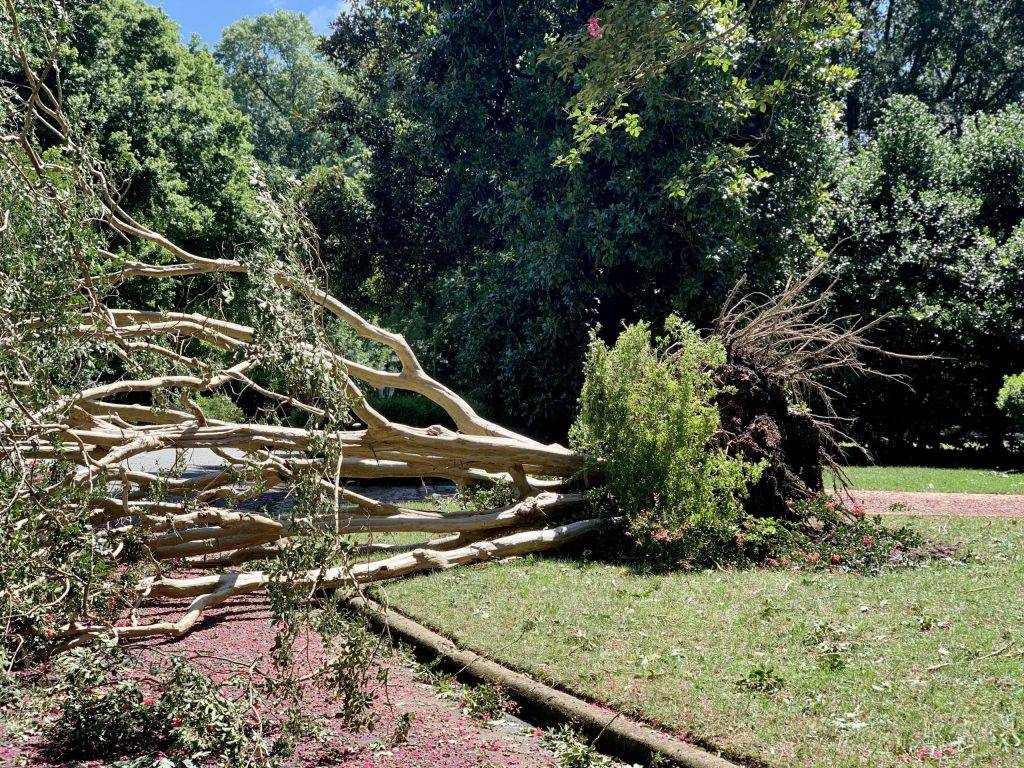
- Do hire a certified arborist for large roots—cutting a major structural root can make the tree fall.
- Do talk to your neighbor first; a quick conversation often avoids a dispute.
For more on the risk of going too far, see what happens if you cut a neighbor’s tree roots and it dies.
Who is liable for damage from a neighbor’s tree roots?
This is where state law splits. Courts generally follow one of a few approaches to encroaching roots and branches:
| Legal rule | Who is responsible | Where it’s common |
|---|---|---|
| Massachusetts Rule | You handle encroachment yourself (self-help); the tree owner usually isn’t liable for natural growth | Many states—the majority approach |
| Hawaii Rule | Tree owner can be liable if roots cause actual, serious harm to your property | Hawaii and several others |
| Sensible-use / Virginia Rule | Owner may be liable when the tree is “noxious” or causes real damage, not just leaf litter | Virginia and similar states |
In practice, “serious harm” means structural damage—cracked foundations, buckled driveways, crushed pipes, or a blocked sewer line—not just roots poking through a garden bed. Cosmetic or minor intrusion rarely supports a lawsuit.
Common types of root damage and typical responsibility
- Foundation cracks: Often your responsibility to address on your side, but serious, documented damage may create a claim in some states.
- Driveway or walkway heaving: You can usually cut the roots and repair the surface; recovery from the neighbor depends on state law and proof of negligence.
- Sewer or drain lines: Roots seek moisture in pipes; clearing and repair is typically the property owner’s cost unless negligence is shown.
- Lawn and garden intrusion: Considered cosmetic in most states—self-help (trimming at the line) is your remedy.
Steps to take when roots invade your yard
- Talk to your neighbor. Raise it calmly and in writing if needed; many issues end here.
- Document everything. Photograph the roots and any damage, and keep dates and repair estimates.
- Confirm the boundary. Verify the property line so you only cut on your side.
- Get a professional opinion. A certified arborist can prune roots safely and advise whether cutting will destabilize the tree.
- Install a root barrier. A physical barrier redirects future growth—see how to stop tree roots from growing.
- Send written notice. If damage is serious, formally notify your neighbor in writing, which can matter if the case escalates.
- Consider mediation or small claims. For unresolved damage, community mediation or small-claims court is usually cheaper than a lawsuit.
How to stop tree roots from coming back
Cutting roots is a temporary fix; they regrow. The most reliable long-term solutions are a root barrier (a rigid or chemical-treated panel buried along the boundary) and, for repeat problems, professional advice on whether the tree should be removed at the source. Root barriers work best when installed before roots reach a foundation or pipe, so acting early saves money.
When the roots are wrecking pavement, read our guide on tree roots cracking a driveway.
Frequently asked questions
Can I make my neighbor remove a tree because of its roots?
Usually no. In most states you can’t force removal of a healthy tree simply because its roots cross the line. You can trim roots on your side, and in some states seek damages if the roots cause serious structural harm.
What if cutting the roots kills the tree?
You could be liable for the tree’s value, sometimes doubled or tripled under state timber-trespass laws. That’s why arborist guidance matters before cutting major roots.
Do I have to tell my neighbor before cutting roots on my side?
The law usually doesn’t require it, but notifying your neighbor first is smart. It preserves goodwill and avoids a surprise that could escalate into a dispute.
Who pays to fix my driveway damaged by a neighbor’s tree roots?
In many states the cost falls on you as self-help, but where the tree owner was negligent or the damage is serious, some states allow you to recover repair costs. Document the damage and check your state’s rule.
Disclaimer: This article is general information, not legal advice. Tree-root and boundary laws vary by state and city. For a specific dispute, consult a local attorney or your county’s law library.


 Jack Turner