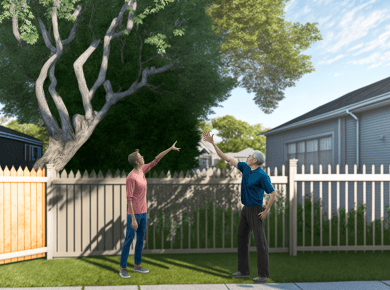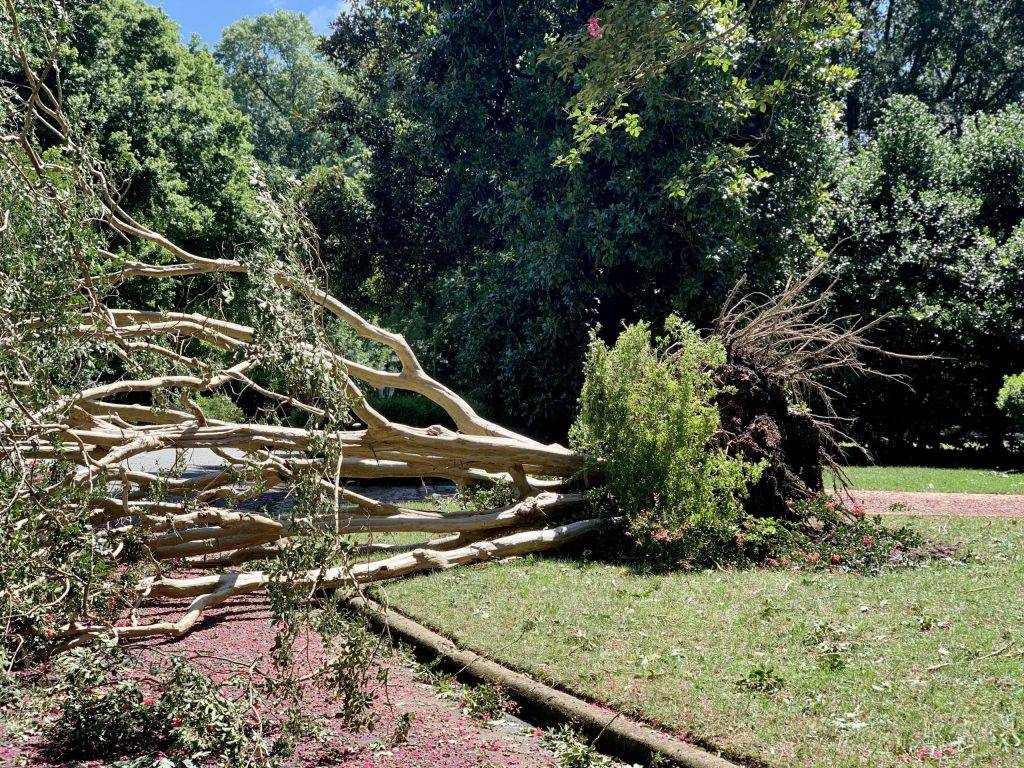

When a tree sitting right on the boundary between two yards falls, the cleanup and the bills can spark a fast disagreement. The general rule: a tree whose trunk straddles the property line is jointly owned by both neighbors, and when it falls each owner’s insurance typically covers the damage to that owner’s own property — unless negligence is involved.
Here is how ownership, insurance, and removal costs are usually divided when a boundary (or “line”) tree comes down.
Who Owns a Boundary Tree
Ownership is determined by where the trunk meets the ground. If the trunk grows partly on each side of the line, both owners share ownership — and neither can remove or seriously alter it without the other’s consent. A tree whose trunk is entirely on one side belongs to that owner, even if branches or roots cross over. For more, see trees on or across the property line.
Who Pays When It Falls
Damage to Your Property
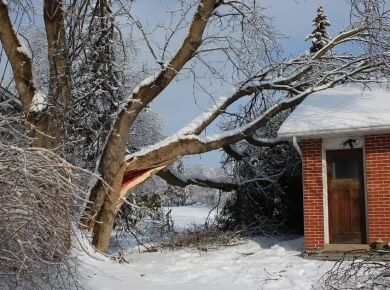
If the fallen tree damages your house, fence, or shed, you generally file with your own homeowners insurer, who repairs your property (minus your deductible). Your neighbor does the same for damage on their side. This “each owner covers their own” approach applies when the fall was caused by weather rather than neglect.
For a jointly owned tree, the cost of removing the fallen trunk is commonly shared between both owners, though insurance only contributes to removal when the tree struck a covered structure (and even then it is usually capped). Agreeing on a split in advance avoids friction.
| What fell / where | Who typically pays |
|---|---|
| Damage on your side | Your homeowners policy |
| Damage on neighbor’s side | Their homeowners policy |
| Removing a shared trunk | Usually split between owners |
| Known-hazard tree that fell | Negligent owner may be liable |
When Negligence Changes Things
If the tree was obviously dead or dangerous and one owner ignored it despite warnings, that owner can be held liable for the damage instead of each party absorbing their own. Documentation of the hazard and any prior requests is what makes a negligence claim stick.
Preventing Disputes
Talk to your neighbor early, agree in writing on inspection and cost-sharing for any shared tree, and keep records. If tension is building, our guide on resolving tree disputes with neighbors walks through a calm, documented approach.
Frequently Asked Questions
Who is responsible for a tree on the property line?
Both neighbors share ownership and responsibility for a tree whose trunk straddles the line, including decisions about removal.
If my neighbor’s tree falls on my house, who pays?
Usually your own homeowners insurance, unless the tree was a known hazard the owner failed to address — then their liability coverage may apply.
Can I remove a boundary tree myself?
No. A jointly owned tree generally cannot be removed without the other owner’s consent; doing so can expose you to a damage claim.
This article is general information, not legal advice; tree and property laws vary by state.


 Jack Turner