
A tree removal estimate is a tree service’s written, itemized price for taking down a specific tree on your property. A legitimate estimate should be free, in writing, and broken into line items—and you should get at least three of them before you hire anyone. Comparing several estimates is one of the simplest ways to avoid overpaying, because quotes for the same tree routinely vary by hundreds of dollars depending on what each company includes.
This guide explains exactly what a good estimate looks like, why prices swing so widely, how many quotes to gather, and how to compare bids “apples to apples” so the lowest number doesn’t end up costing you the most. For typical pricing ranges, see our deeper breakdown of tree removal cost.
What is a tree removal estimate?
A tree removal estimate is a quote from a tree care company that states the price to remove a tree and details the work involved. Most reputable arborists provide estimates at no charge after either visiting your property or reviewing clear photos and measurements. The estimate is not a final invoice, but a well-written one should be close to the final cost barring hidden hazards (like internal rot) discovered mid-job.
Estimates differ from a quick “ballpark” phone number. A phone figure is a rough guess; a true estimate reflects the specific tree’s size, location, condition, and the access and disposal challenges of your site. If you only want pricing ranges before calling, our tree removal cost calculator can give you a starting point.
What a tree removal estimate should include
The single biggest mistake homeowners make is comparing two numbers that cover different work. A complete written estimate spells out the scope so you know precisely what you are paying for. Look for these line items:
- Tree identification and size — species, approximate height, and trunk diameter so the scope is documented.
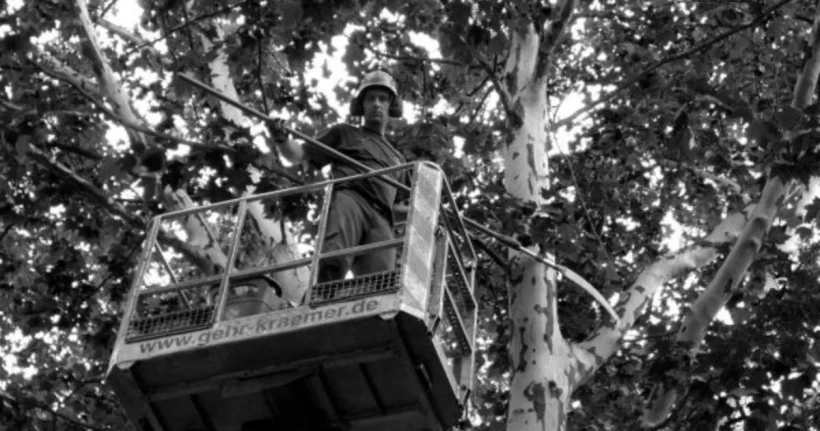
- Removal method — climbing vs. bucket truck vs. crane, which drives labor time and cost.
- Stump handling — whether the stump is left, ground down, or fully removed (this is often a separate line). See stump grinding cost for typical pricing.
- Debris removal and cleanup — hauling wood and chips away, or leaving them; raking and final cleanup.
- Site protection — how they’ll protect lawns, fences, and structures.
- Proof of insurance — general liability and workers’ compensation.
- Total price, payment terms, and timeline — including any deposit and the expected date of work.
If any of these are missing, ask for them in writing before you sign.
Sample estimate line-item breakdown
Costs vary widely by region, tree size, and access, so treat the figures below as illustrative ranges rather than fixed prices. Always rely on your own local written estimates.
| Line item | Typical share of the bill | Notes |
|---|---|---|
| Labor (climbing/rigging or bucket truck) | ~50–70% | The biggest driver; complex or hard-to-access trees cost more. |
| Equipment (crane, chipper, stump grinder) | ~10–25% | Crane jobs near houses or power lines raise this share. |
| Debris hauling & disposal | ~10–20% | Heavy trunk wood and chips; sometimes optional. |
| Stump grinding | Often separate | Frequently a standalone line item, not included by default. |
| Permits (if required) | Varies | Some cities require a permit for protected or street trees. |
Why tree removal estimates vary so much
Two estimates for the same tree can differ by hundreds of dollars for legitimate reasons. The main factors are:
- Size and species — taller trees and dense hardwoods take more time and equipment.
- Location and access — a tree close to a house, fence, or power lines requires careful rigging or a crane, raising the price. Our guide to tree removal cost by size shows how height changes the math.
- Tree condition — dead, leaning, or storm-damaged trees are more dangerous and cost more, sometimes as emergency tree removal.
- What’s included — stump grinding, debris hauling, and cleanup may or may not be in the base price.
- Company overhead and insurance — fully insured, certified crews cost more than uninsured operators, and that difference protects you.
How many estimates should you get?
Get at least three written estimates. Three quotes let you line up pricing side by side and spot both the overpriced outlier and the suspiciously cheap bid. Homeowners who compare three or more quotes tend to pay noticeably less than those who accept the first number, and—just as important—three bids reveal which company has actually scoped the job carefully versus guessing.
When you request each estimate, give every company the same information: the same tree, the same requests (for example, “remove the tree and grind the stump, haul away all debris”). That consistency is what makes the comparison fair.
How to compare tree removal quotes
Comparing quotes is about scope and trust, not just the bottom-line number. Use this checklist:
- Match the scope — confirm each quote covers identical work (removal + stump + debris + cleanup). A bid that leaves the stump or debris is not comparable to one that doesn’t.
- Verify insurance — ask for current certificates of general liability and workers’ compensation. If a worker is hurt on an uninsured crew, you could be liable.
- Check credentials — prefer ISA Certified Arborists or TCIA-accredited companies. Learn what an arborist costs and why credentials matter.
- Read reviews and ask for references — recent, local reviews and a list of past jobs.
- Watch the deposit — a small deposit can be normal, but paying more than 10–20% before the work is done is a red flag.
Green flags vs. red flags in an estimate
| Green flags (trustworthy) | Red flags (be cautious) |
|---|---|
| Free, written, itemized estimate | Verbal-only price, no paperwork |
| Shows proof of insurance on request | “We’re insured”—but won’t provide a certificate |
| ISA Certified Arborist / TCIA accredited | No credentials and high-pressure sales |
| Reasonable deposit (or none) | Large upfront cash payment required |
| Clear scope, timeline, and cleanup plan | Vague scope; cleanup “extra” |
Remember: the cheapest bid is sometimes cheap for a reason—an uninsured crew, inexperienced workers, or a plan to leave the stump and debris behind. For a full walkthrough of vetting a company, see how to hire a tree removal company and our list of questions to ask before hiring a tree service.
Are tree removal estimates free?
Most tree removal estimates are free. Reputable companies provide a no-cost, no-obligation written estimate after assessing the tree. A few situations can involve a fee—most commonly when you need a formal arborist report for an insurance claim, permit, or legal dispute, which is a professional assessment document rather than a sales quote. If a company charges for a basic removal estimate, ask why before agreeing.
Questions to ask before accepting an estimate
- Is this estimate in writing and itemized?
- Does it include stump grinding and full debris removal?
- Can you show current liability and workers’ comp certificates?
- Are you (or your crew lead) an ISA Certified Arborist?
- Will I need a permit, and who handles it?
- What deposit do you require, and when is the balance due?
- What happens to the price if you find hidden rot or extra hazards?
You can verify an arborist’s credentials through the ISA “Find an Arborist” directory and look up accredited firms via the Tree Care Industry Association.
Frequently asked questions
How much does a tree removal estimate cost?
Almost always nothing. Established tree services give free written estimates. Expect a possible fee only for a formal arborist report used for insurance, permits, or disputes.
How long is a tree removal estimate valid?
Many estimates are valid for about 30 days, though this varies by company. Prices can change with fuel, demand, and season, so ask how long the quote holds.
Why is one estimate so much higher than the others?
Usually because it includes more—stump grinding, debris hauling, crane work, or higher insurance and certification standards. Confirm the scope before assuming it’s overpriced.
Should I always choose the cheapest estimate?
No. Choose the best value: a fair price from an insured, credentialed company with a clear scope. The lowest bid can cost more if it’s uninsured or leaves work undone.
Can I get a tree removal estimate without a site visit?
Sometimes. Many companies will give a preliminary estimate from clear photos and measurements, but a final price usually requires an on-site look, especially near structures or power lines.
Disclaimer: Pricing ranges in this article are general illustrations and vary widely by region, tree, and company. Always rely on your own local written estimates and verify each company’s insurance and credentials.


 Jack Turner