
To save a dying tree, act quickly: figure out what’s stressing it, water deeply but correctly, spread a proper ring of mulch, prune only the clearly dead wood, and call a certified arborist if it doesn’t improve. Many declining trees can recover over one to three growing seasons—if the roots are still alive and you address the underlying cause rather than just the symptoms.
Not sure whether your tree is actually in decline? Learn how to tell if a tree is dying so you can decide whether to treat it or remove it.
This guide walks through how to tell whether a tree is truly dying, whether it can be saved, and the exact steps to give it the best chance. It also covers when a tree is too far gone—or too hazardous—to keep.
Signs a tree is dying
Before you can save a tree, confirm it’s actually in decline and not just dormant. Watch for these warning signs:
- Dead, brittle branches that snap cleanly and are dry inside.
- Wilting, undersized, or discolored leaves, or leaves dropping out of season.
- Bare branches on one side or throughout the canopy.
- Cracks, cavities, or peeling bark on the trunk.
- Fungi or mushrooms at the base or on the trunk (often a sign of internal rot).
- Leaning that’s new or worsening, with heaving soil at the base.
A quick field test: scratch a small spot of bark on a twig with your fingernail. If the layer underneath is green and moist, that part is alive; if it’s brown and dry, that section is dead. Test several branches—and the trunk—before deciding.
Can a dying tree be saved?
It depends on how much living tissue remains and what’s causing the decline. A tree with healthy roots and green tissue under the bark on the trunk and major limbs has a real chance. A tree with extensive trunk rot, more than half a dead canopy, or root damage is far less likely to recover and may become a hazard. The honest answer is that some trees can be revived and others are best removed for safety—an arborist can tell you which.
How to save a dying tree, step by step
1. Diagnose the cause first
Treating the wrong problem wastes time you may not have. Look for the most common culprits: too much or too little water, compacted or buried roots, recent construction or grade changes, “volcano” mulch piled against the trunk, pests, disease, or fresh wounds. Match the symptom to the cause before acting (see the table below).
2. Water deeply—and correctly
Both drought and overwatering kill trees. Dig down about six inches near the drip line: if the soil is dust-dry, water slowly and deeply; if it’s soggy, stop watering and let it drain. Aim to moisten the root zone, not just the surface, and water in the early morning.
3. Mulch properly
Spread a 2–4 inch layer of wood-chip mulch in a wide ring out toward the drip line, but keep it 3–6 inches away from the trunk. Mulch piled against the bark (“volcano mulching”) traps moisture and invites rot—undo it if you find it.
4. Prune only the dead and dangerous wood
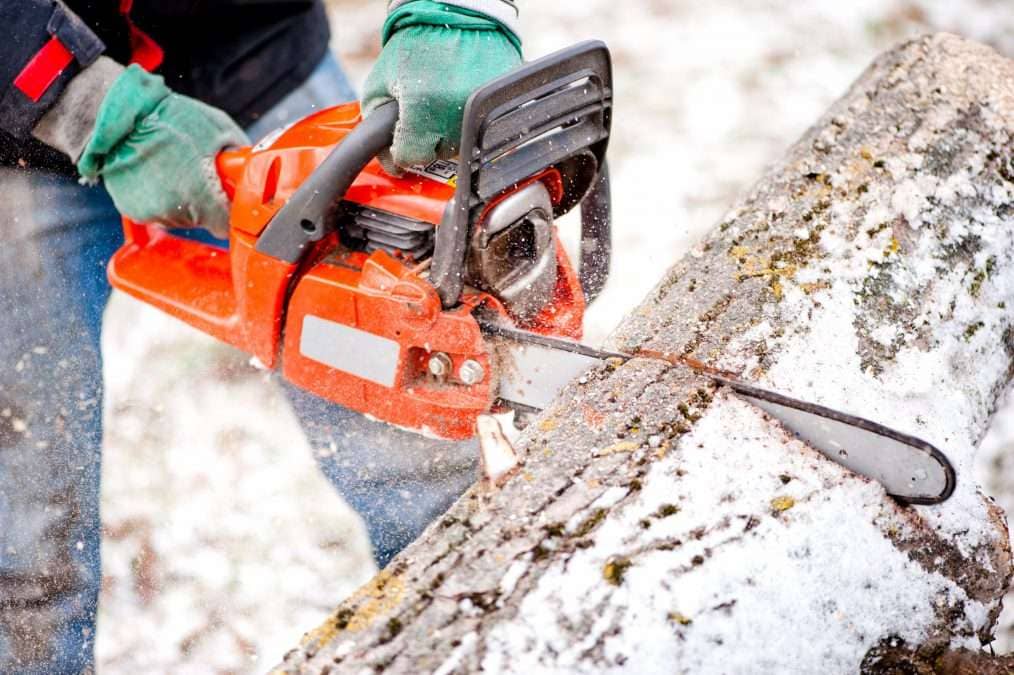
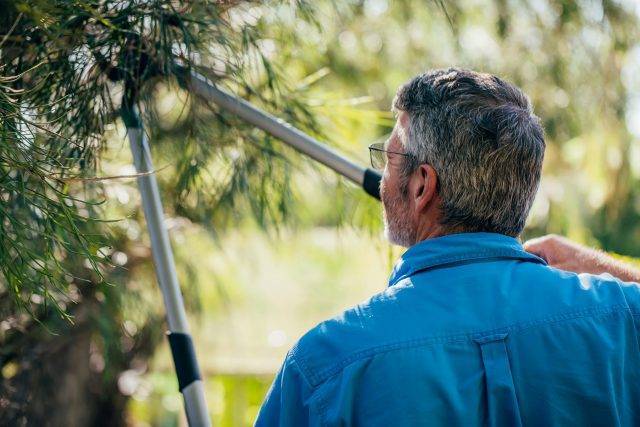
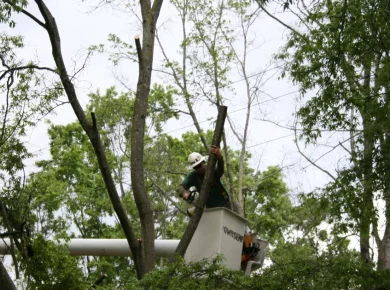
Remove clearly dead, broken, or diseased branches with clean, sharp tools, cutting just outside the branch collar. Don’t over-prune a stressed tree—removing too much living canopy adds stress. If large limbs or chainsaw work are involved, hire a pro.
5. Relieve the roots and hold the fertilizer
If the soil is compacted, aerate gently around the drip line so oxygen and water reach the roots. Avoid fertilizing a stressed tree right away—a sudden push of growth can do more harm than good. Focus first on water, mulch, and removing whatever is stressing the roots.
Common causes of tree decline and how to fix them
| Cause | What you’ll see | What to do |
|---|---|---|
| Underwatering / drought | Wilting, scorched leaf edges, early leaf drop | Deep, slow watering at the drip line; mulch to hold moisture |
| Overwatering / poor drainage | Yellowing leaves, soggy soil, fungus | Stop watering; improve drainage; let soil dry out |
| Volcano mulch / buried root flare | Mulch against trunk, no visible root flare | Pull mulch back 3–6 inches; expose the root flare |
| Compacted soil / construction damage | Thinning canopy after nearby digging or traffic | Aerate; avoid traffic over roots; consult an arborist |
| Pests or disease | Holes, chewed or spotted leaves, oozing bark | Identify the pest/disease; targeted treatment by a pro |
| Trunk rot / root rot | Mushrooms, soft wood, large dead sections | Often unsafe—have an arborist assess for removal |
When to call an arborist (or remove the tree)
Bring in a certified arborist if the tree doesn’t improve after a season of care, if more than half the canopy is dead, if there’s significant trunk or root rot, or if the tree leans over a house, driveway, or walkway. Arborists can diagnose problems an untrained eye misses and recommend treatment—or removal if the tree is beyond saving. To understand the investment, see what a certified arborist costs.
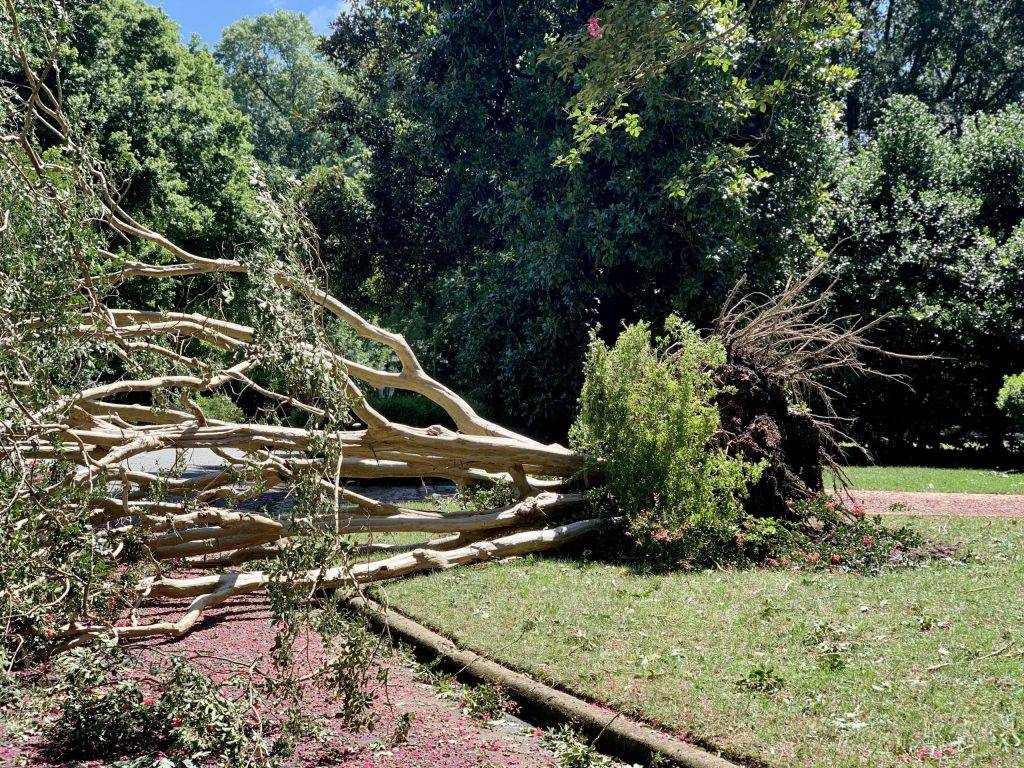
If the tree is clearly dead or hazardous, removal is the safer choice. A dead tree near your home can become an emergency in the next storm. Review typical tree removal cost, and if it’s already failing, emergency tree removal pricing. You can also find a qualified professional through the ISA’s Find an Arborist directory or learn tree-care basics from the Arbor Day Foundation.
Related reading: if root pruning has stressed your tree — see how to stop tree roots from growing safely.
If treatment is not enough, our guide on the signs it is time to remove a tree can help you make the call.
Frequently asked questions
How do I know if my tree is dying or just dormant?
Do the scratch test: if the tissue under the bark is green and moist on several branches, the tree is likely alive and may be dormant. Widespread brown, dry tissue and brittle branches point to decline.
How long does it take to revive a dying tree?
Recovery is gradual. With the cause corrected, many trees show improvement over one to three growing seasons. Don’t expect an overnight turnaround.
Should I fertilize a dying tree?
Usually not right away. A stressed tree needs water, air at the roots, and relief from whatever is harming it before fertilizer. Forcing growth too soon can add stress. Ask an arborist before feeding.
Can a tree with half its branches dead recover?
It’s possible but uncertain. A tree that has lost more than half its canopy is seriously stressed and may be a safety risk. Have an arborist evaluate whether to treat or remove it.
Is it cheaper to save a tree or remove it?
Care and treatment are often cheaper than removal in the short term, but only if the tree can realistically recover. Spending money to save a tree that’s already failing usually isn’t worth it.
Safety note: A dead or unstable tree can drop limbs or fall without warning. If a tree leans over your home or a walkway, or shows major trunk rot, treat it as a hazard and have a professional assess it rather than attempting major work yourself.

 Jack Turner