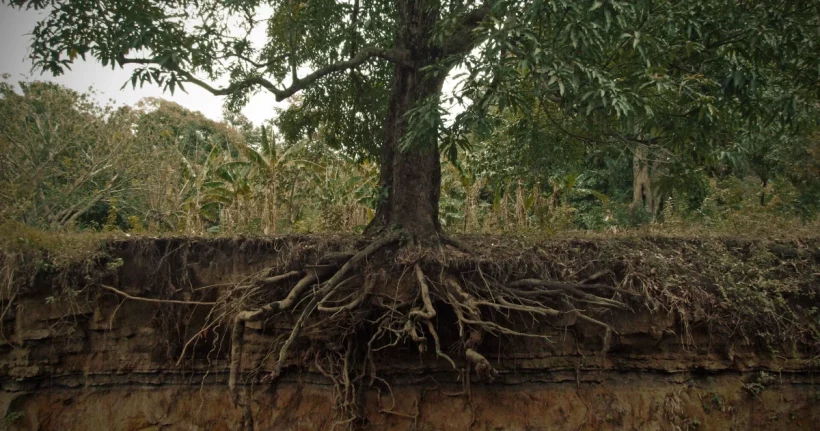

You can’t completely stop a living tree’s roots from growing without harming or killing the tree — but you can redirect, slow, and contain them safely. The most reliable methods are installing a root barrier, watering deeply but infrequently, pruning surface roots and suckers in moderation, and using targeted treatments for roots that invade pipes or threaten a foundation. As a rule of thumb, never remove more than about 25% of a tree’s roots, because cutting too many starves and destabilizes the tree.
This guide walks through every safe option, what each one actually does, and when it’s time to call an arborist instead of fighting the roots yourself.
Why tree roots spread where you don’t want them
Roots grow toward three things: water, oxygen, and nutrients. Most feeder roots sit in the top 12–18 inches of soil and can extend well beyond the canopy — often two to three times the branch spread. That’s why they surface in lawns, sneak under driveways, and find the tiny condensation and leaks around sewer pipes. Understanding the “why” matters, because the goal isn’t to kill the roots (that kills the tree) — it’s to remove the incentive and put a physical wall in their path.
Safe ways to stop tree roots from growing without killing the tree
Here are the main control methods, what they do, and who they’re best for.
| Method | What it does | Best for | DIY or pro |
|---|---|---|---|
| Root barrier | Physically redirects roots downward and away | Protecting pipes, foundations, hardscape | DIY (small) / pro (large) |
| Deep, infrequent watering | Discourages shallow, spreading roots | Lawns and surface-root problems | DIY |
| Pruning surface roots (≤25%) | Removes specific problem roots | Tripping hazards, minor lifting | DIY (small) / pro |
| Cutting suckers and shoots | Stops new sprouts in the lawn | Trees that sucker (e.g., poplar, elm) | DIY |
| Growth inhibitor | Chemically slows regrowth | Persistent sprouting | Pro (arborist) |
| Foaming root killer / hydro jetting | Clears and deters roots inside pipes | Sewer and drain intrusion | Pro (plumber) |
1. Install a root barrier
A root barrier is a sheet of rigid plastic (often HDPE) or specialized fabric buried vertically in the soil to steer roots down and around rather than into a target. Barriers work best when installed early, but they can be added at almost any stage. For pipes or a foundation, dig a trench roughly 24–36 inches deep between the tree and the structure and set the barrier so its top sits just above grade. Done correctly, this is the single most effective way to protect built structures without touching the tree.
2. Water deeply and infrequently
Shallow, frequent watering trains roots to stay near the surface and spread sideways hunting for moisture. Switch to deep, infrequent watering — a slow soak for a couple of hours every week or two rather than daily sprinkling — to encourage roots to grow downward. A well-watered tree is also far less likely to send roots searching toward pipe leaks and damp foundations.
3. Prune surface roots — carefully
You can cut specific surface roots that lift pavers or create trip hazards, but moderation is everything. Cutting too much removes the tree’s anchorage and food supply. Stay under roughly 25% of the total root mass, never cut large structural roots close to the trunk, and ideally space root pruning out over more than one season. If a root is thicker than a few inches or within a few feet of the trunk, have an arborist evaluate it first.
4. Cut suckers and root sprouts
Some species (poplars, elms, aspens, and others) push up “suckers” — new shoots from the root system — across the lawn. The most effective fix is simple and repeated: cut each sprout as low as possible with hand pruners as soon as it appears. Mowing tends to encourage more sprouting, so hand-cutting wins. For stubborn cases, an arborist can apply a growth inhibitor.
How to stop tree roots from growing into pipes
Roots invade sewer lines through tiny cracks and joints where moisture escapes. To stop and prevent it:
- Fix leaks first. Leaks are root magnets; sealing or relining the pipe removes the attraction.
- Use a foaming root killer rated for pipes to clear existing roots and discourage regrowth. Avoid pouring copper sulfate near the tree’s root zone, as it can harm the tree and isn’t always allowed locally.
- Hydro jet or auger the line to physically clear an active blockage — jetting is the more thorough option.
- Reline severely damaged pipe with a new internal liner to seal cracks for good.
- Plant new trees 10–20 feet away from sewer laterals, and choose less aggressive species.
If you’re already dealing with a blockage, our guide to tree roots in a sewer line covers signs, costs, and repair options in detail.
How to protect a foundation from tree roots
Healthy roots rarely crack a sound foundation on their own; the bigger risk is roots drying out clay soil and causing it to shrink and settle. Protect a foundation by installing a deep root barrier between the tree and the structure, keeping soil moisture steady with consistent watering, and getting a professional assessment before removing any large root near the footing. If a tree is too close and already causing movement, removal may be the safest long-term answer — weigh that against typical tree removal cost. For damage involving an adjoining owner, see our guide on a neighbor’s tree roots damaging your foundation or pipes.
Choose the right tree (prevention)
The easiest way to avoid root problems is to plant species with less aggressive root systems and give them room. Trees often praised for tamer roots include dogwood, Japanese maple, crape myrtle, and arborvitae. Notoriously invasive rooters include willows, poplars, and silver maples — beautiful, but keep them far from pipes, paving, and structures.
When to call an arborist
Bring in a certified arborist when a problem root is large or close to the trunk, when more than a quarter of the root zone is involved, when a tree is near a foundation, or when you’re considering chemical treatment. An arborist can assess the tree’s health and stability and apply growth inhibitors safely. If the tree is already declining, see how to save a dying tree before doing anything drastic. The International Society of Arboriculture’s treesaregood.org is a reliable place to find a credentialed professional.
A quick note
This is general guidance, not site-specific advice. Soil type, species, local rules on chemical root killers, and proximity to utilities all change what’s safe. When structures, shared property lines, or large roots are involved, confirm with a certified arborist or your local authority first.
If the problem is a cracked or lifting driveway specifically, see our dedicated guide on tree roots under a driveway for repair options and costs.
Frequently asked questions
Can you permanently stop tree roots from growing?
Not without killing the tree. Roots grow as long as the tree is alive, so the realistic goal is to redirect and contain them with barriers, watering habits, and selective pruning rather than to stop them entirely.
Will cutting tree roots kill the tree?
It can if you cut too many. Removing up to about 25% of the root system is generally tolerated by a healthy tree, but cutting large structural roots near the trunk can starve or destabilize it.
What kills tree roots without killing the tree?
Nothing reliably kills only the roots while sparing the tree — root killers and herbicides travel back to the tree. To target roots safely, use physical barriers and pruning, and leave chemical treatments inside pipes to a professional.
How far should I plant a tree from my house or sewer line?
A common guideline is 10–20 feet from sewer laterals and well beyond the mature canopy spread from a house, more for large or aggressive species. Ask a local nursery about mature size before planting.
Do root barriers really work?
Yes, when installed correctly and deep enough. They redirect roots downward and away rather than stopping growth, which is exactly what protects pipes, paving, and foundations.
If the roots come from next door, read what to do about a neighbor's tree roots in your yard.
If your concern is the house rather than the yard, our guide to tree roots damaging a foundation explains what actually causes the damage.


 Jack Turner