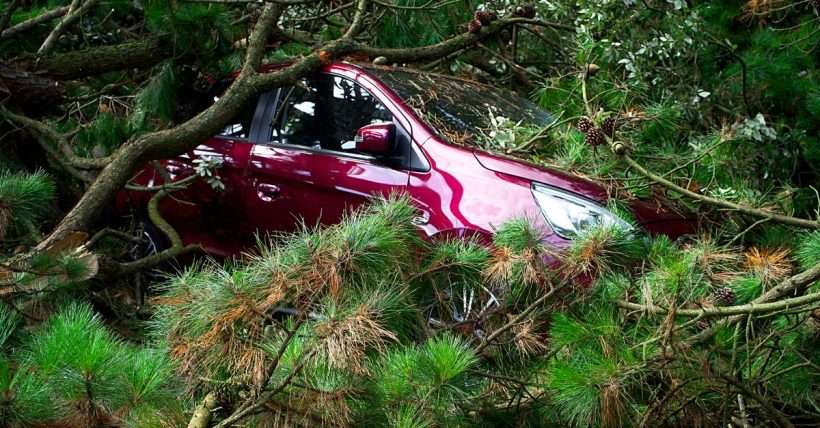

A tree crashing onto your car is jarring — and the immediate worry is the repair bill. Here is the short answer: damage from a fallen tree is almost always covered by the comprehensive portion of your auto insurance, not by your homeowners policy and usually not by the tree owner. You pay your auto deductible, and your insurer handles the rest.
That surprises people, especially when the tree belonged to a neighbor. Below is exactly which policy pays, when the tree’s owner can be held liable instead, and what to do right after it happens.
Which Insurance Covers a Tree Falling on a Car
Comprehensive Auto Coverage
Comprehensive coverage pays for damage to your vehicle from events outside a collision — including falling trees and limbs, storms, and hail. If you carry comprehensive (it is optional, but required by most lenders), your insurer pays to repair or total the car after your deductible. Liability-only policies do not cover it.
Why Not Homeowners or the Neighbor
Homeowners insurance covers structures and belongings, not licensed vehicles. And when a healthy tree falls in a storm, it is generally treated as an act of nature, so the tree owner is not automatically responsible — even if it was their tree.
| Policy | Covers car damage? |
|---|---|
| Auto — comprehensive | Yes (after deductible) |
| Auto — liability only | No |
| Your homeowners | No (vehicles excluded) |
| Neighbor’s homeowners | Only if they were negligent |
When the Tree Owner Is Liable
Negligence is the exception that shifts responsibility. If the tree was visibly dead, diseased, or dangerous and the owner knew (or was warned) and failed to act, their homeowners liability coverage may pay. The key is prior notice and an obvious hazard — a healthy tree that fell in a windstorm rarely qualifies. If a neighbor’s clearly hazardous tree hit your property, our guide on a neighbor’s dead tree causing damage explains how liability works.
What to Do After a Tree Hits Your Car
Move to safety and avoid downed power lines. Photograph the car, the tree, and the scene before anything is moved. File a comprehensive claim with your auto insurer, keep repair estimates, and — if you believe the owner was negligent — document the tree’s prior condition and any past warnings. For boundary or ownership questions, see who is responsible for trees on the property line.
Frequently Asked Questions
Does insurance cover a tree falling on my car?
Yes, if you carry comprehensive auto coverage. It pays for repairs or a total loss after your deductible. Liability-only coverage does not.
Can I make my neighbor pay if their tree fell on my car?
Only if the tree was a known hazard they failed to address. A healthy tree downed by a storm is usually treated as an act of nature, so your own comprehensive coverage applies.
Should I file a claim if the damage is minor?
If the repair cost is near or below your deductible, paying out of pocket may be cheaper than a possible premium increase.
This article is general information, not legal or insurance advice; coverage varies by policy and state.

 Jack Turner