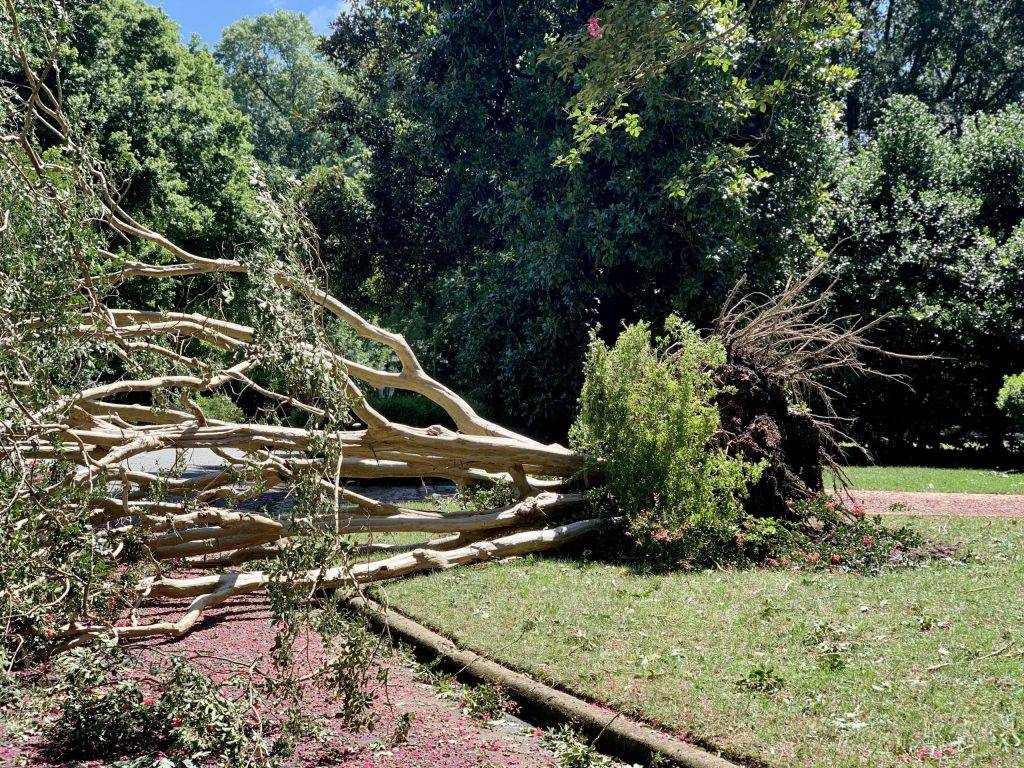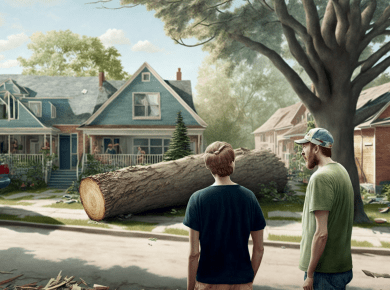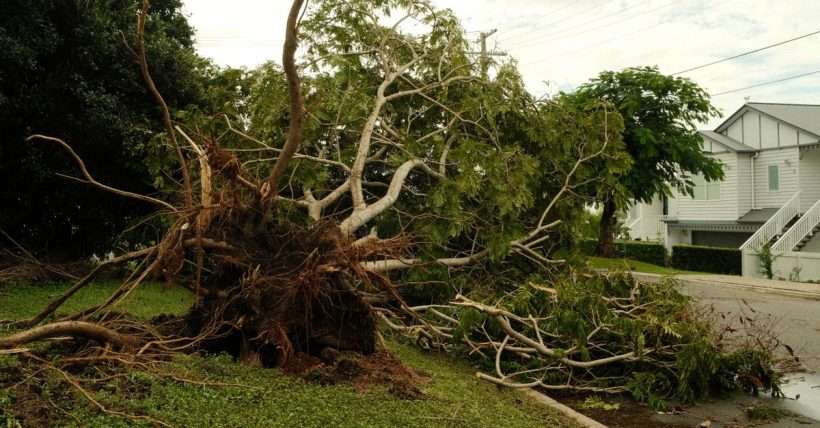

When a storm sends your neighbor’s tree crashing onto your roof, fence, or yard, the first question is almost always the same: do they have to pay for it? The answer surprises most homeowners. If the tree was healthy and a storm brought it down, your neighbor is usually not legally liable — the damage is treated as an “act of God,” and you typically file with your own insurance. Liability only shifts to your neighbor when they were negligent: when the tree was visibly dead, diseased, or dangerous and they were warned but did nothing.
This guide explains the legal rule courts actually apply, the difference between an act of God and negligence, how to tell which situation you’re in, and the practical steps to take after a tree comes down.
The General Rule: A Healthy Tree in a Storm Is Usually No One’s Fault
Across nearly every U.S. state, liability for a fallen tree turns on fault, not ownership. The mere fact that the tree grew in your neighbor’s yard does not make them responsible for the damage it causes. Courts ask a single core question: did the tree owner act reasonably to maintain the tree?
If a structurally sound, living tree is blown over by high winds, ice, or lightning, the law generally considers the event unforeseeable and unpreventable. That is the classic “act of God” (or “force majeure”) defense, and it usually means each property owner absorbs their own loss through their own insurance.
Why You Usually File With Your Own Insurer
Homeowners insurance typically follows the property that was damaged, not the tree that caused it. So if your neighbor’s healthy oak falls on your house during a storm, you file a claim with your insurer, who pays for repairs (minus your deductible) and then decides whether to pursue your neighbor’s insurer through “subrogation.” For a closely related breakdown, see our guide on what to do when a neighbor’s tree falls on your house.
When Negligence Makes Your Neighbor Liable
The act-of-God defense disappears the moment the tree was a known hazard. If your neighbor knew — or reasonably should have known — that the tree was dead, dying, rotting, leaning, or structurally unsound, and they failed to act, they can be held liable for the resulting damage even if a storm was the final trigger.
What Counts as Negligence
Courts look for evidence that the danger was foreseeable and ignored. Common negligence signals include:
- The tree was visibly dead or dying (no leaves in season, bare or fungal-covered bark, large dead limbs).
- The tree had an obvious lean, split trunk, or exposed root rot.
- The owner received a prior written warning from you, an arborist, or the city and took no action.
- An arborist or inspector had flagged the tree as hazardous.
If you have concerns about a neighbor’s tree before it falls, putting them in writing is the single most important thing you can do — it creates the paper trail that establishes foreseeability. Our walkthrough on what to do about a neighbor’s dangerous tree covers exactly how to document it.
Act of God vs. Negligence: The Deciding Factors
The table below summarizes how the same falling tree can produce two completely different outcomes depending on the tree’s condition and what the owner knew.
| Situation | Is the tree owner liable? | Who usually pays |
|---|---|---|
| Healthy tree, normal storm, no prior warning | No (act of God) | Your own insurer |
| Visibly dead/diseased tree, no warning given | Often yes (should have known) | Owner / owner’s insurer |
| Dangerous tree, owner warned in writing, ignored | Usually yes (negligence) | Owner / owner’s insurer |
| Healthy tree, but owner did unsafe pruning | Possibly yes | Owner / owner’s insurer |
| Extreme/declared disaster (hurricane, tornado) | Rarely | Your own insurer |
What to Do After a Neighbor’s Tree Falls on Your Property
Whether or not your neighbor turns out to be liable, the steps right after the damage are the same — and acting calmly protects any future claim.
Immediate Steps
- Stay safe. Treat any downed lines as live and keep clear of unstable limbs.
- Document everything. Photograph the tree, the damage, and the tree’s condition (look for rot or deadwood) from multiple angles before anything is moved.
- Make temporary repairs to prevent further damage (tarp the roof) and keep the receipts.
- Notify your insurer promptly and start a claim.
- Talk to your neighbor — share information and exchange insurance details without assigning blame on the spot.
If You Suspect the Tree Was Already Dangerous
If the fallen tree shows clear signs it was dead or diseased, an independent certified arborist (ISA) report documenting its pre-fall condition can support a negligence claim against your neighbor or their insurer. Combine it with any prior written warnings you sent. For how removal costs get handled afterward, see who is responsible for fallen tree removal.
What If the Tree Hit a Car Instead of the House?
Damage to a vehicle is handled differently from damage to a structure. A tree that falls on your car is covered under the comprehensive portion of your auto policy, not homeowners insurance — and the same act-of-God vs. negligence logic applies to whether your neighbor is on the hook. We cover that scenario fully in tree fell on my car: who pays.
Frequently Asked Questions
If my neighbor’s healthy tree falls on my house in a storm, do they pay?
Usually no. If the tree was healthy and a storm brought it down, it is treated as an act of God and you file with your own homeowners insurer. Your neighbor pays only if the tree was a known hazard they failed to address.
How do I prove my neighbor was negligent?
Show the tree was visibly dead, diseased, or dangerous and that your neighbor knew or should have known. The strongest evidence is a prior written warning plus photos of the tree’s condition and a certified arborist’s report.
Does it matter if I warned my neighbor before the tree fell?
Yes — significantly. A documented warning establishes that the danger was foreseeable, which is the key element of a negligence claim. A verbal warning helps; a written one (text, email, or letter) is far stronger.
Whose insurance goes up after a fallen-tree claim?
Generally the policy that pays the claim. If you file with your own insurer for an act-of-God event, the claim is on your record; if your neighbor is found negligent, their insurer may ultimately bear the cost through subrogation.
This article is general information, not legal advice. Tree-liability rules and insurance terms vary by state and policy — consult a local attorney or your insurer for your specific situation.

 Jack Turner