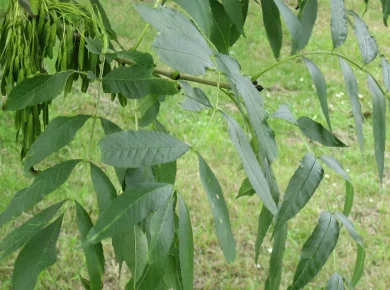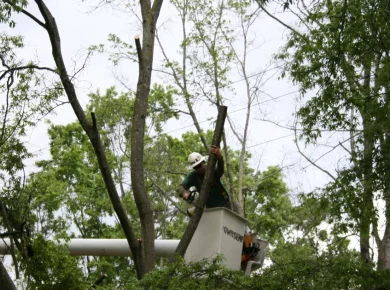

In most of the United States, you can legally trim a neighbor’s tree branches that hang over your yard — but only back to the property line, and only at your own expense. This long-standing “self-help” rule lets you cut the parts of the tree that cross onto your property. What it does not let you do is reach over the boundary, enter your neighbor’s land without permission, or cut so aggressively that you damage or kill the tree.
Get those limits wrong and a simple trim can turn into a lawsuit. Because the tree still belongs to your neighbor, cutting too far can expose you to liability for the tree’s value — sometimes doubled or tripled under state law. Here is exactly what you can and cannot do, and how to trim safely.
The basic rule: trim to the property line
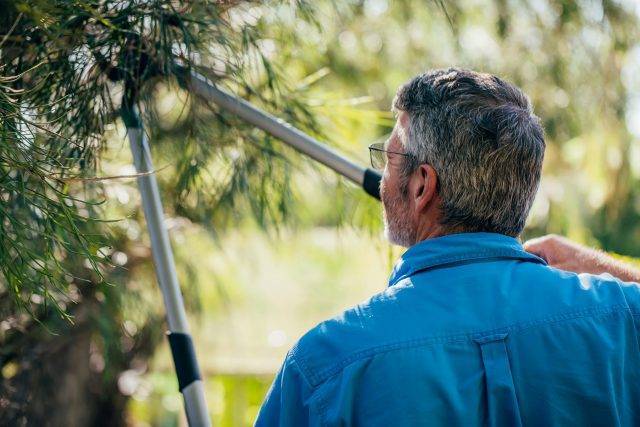
Under the common-law self-help doctrine followed in most states, a property owner may cut back overhanging branches (and encroaching roots) to the boundary line without the tree owner’s permission. The reasoning is simple: the airspace above your land is yours, so growth that intrudes into it is yours to clear.
Three conditions almost always apply. You may cut only up to the property line, never past it. You must stay on your own property to do the work — reaching or stepping across the line can be trespass. And you cannot destroy the tree or harm its health; trimming that kills the tree can make you liable. If you are unsure where the line runs, start with how to find your property line.
What you are not allowed to do
The self-help right is narrow. Crossing these lines is where homeowners get into legal trouble:
| Action | Allowed? |
|---|---|
| Trim branches back to the boundary, from your side | Usually yes |
| Cut branches beyond the property line | No |
| Enter the neighbor’s yard to cut without permission | No |
| Cut so much that the tree dies or is disfigured | No — potential liability |
| Remove the whole tree because it overhangs | No |
If you cut beyond your rights and the tree is damaged, many states allow the owner to recover the tree’s value — and statutes in most states multiply that figure (double or treble damages) for unauthorized cutting. A minor trim can become an expensive mistake.
Who pays, and who owns the cut branches?
Because you are the one choosing to trim, you generally pay for the work. You cannot bill your neighbor for trimming the parts on your side, even though it is their tree.
What to do with the clippings
Technically the branches you cut are the tree owner’s property. The courteous — and in some places required — approach is to offer the cut wood back or dispose of it yourself. Do not toss branches back over the fence into your neighbor’s yard, which can itself spark a dispute. When trimming is extensive, compare quotes; our guide to tree trimming cost shows typical pricing.
Important exceptions to know first
Before you pick up the saw, check whether one of these applies:
- Boundary trees. A tree whose trunk sits on the property line is usually jointly owned, and neither neighbor may remove or seriously harm it without the other’s consent.
- Protected or heritage trees. Some cities require a permit to trim or remove certain species or large trees. See when tree cutting is illegal.
- HOA rules. Community rules can restrict how and when you trim.
- Utility lines. Never trim branches near power lines yourself — that is the utility’s job.
Healthy branches vs. a dangerous tree
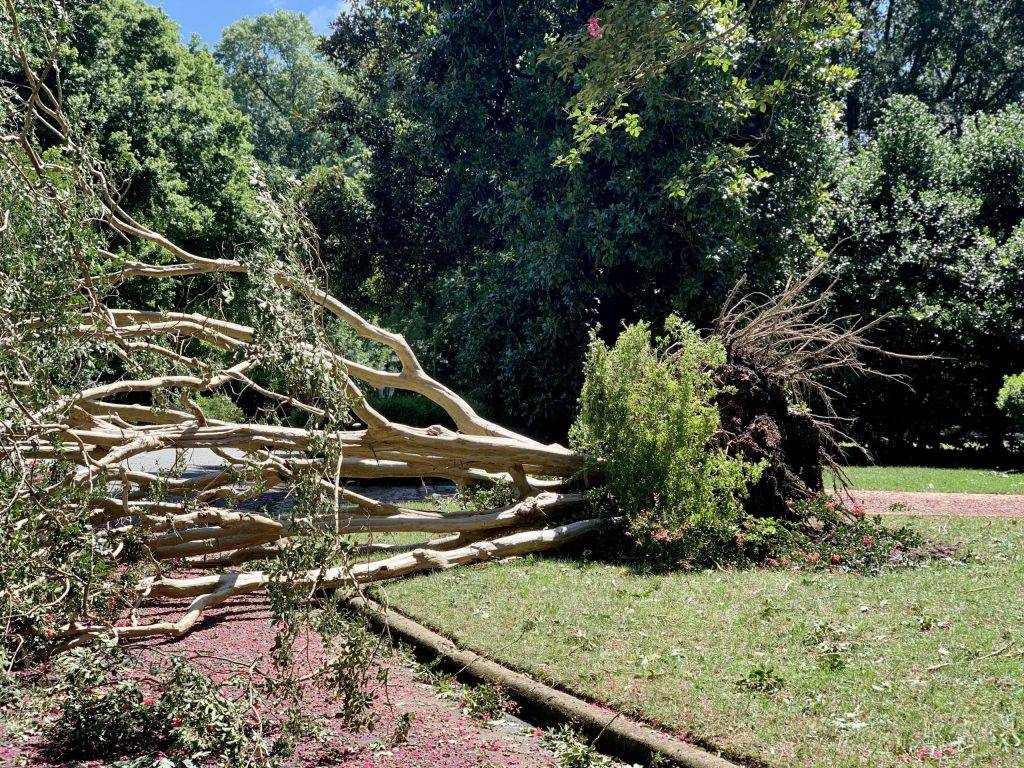
The self-help rule covers normal overhang from a healthy tree. It is a different situation when the tree is dead, diseased, or clearly hazardous and threatens your home or family. In that case you may have grounds to demand action from your neighbor rather than just trimming your side. Read what to do about a neighbor’s tree leaning over your house and how to resolve tree disputes with neighbors.
| Situation | Your typical option |
|---|---|
| Healthy branches overhanging your yard | Trim to the property line yourself |
| Dead or hazardous limbs threatening your property | Notify the neighbor in writing; may become their responsibility |
| Tree trunk on the boundary line | Get mutual consent before major work |
How to trim without starting a fight
A little courtesy prevents most disputes and protects you legally:
- Talk to your neighbor first. A heads-up is polite and often avoids conflict. A written note helps — see our sample letter to a neighbor about a tree.
- Confirm the boundary so you know exactly where you can cut.
- Hire a certified arborist for large limbs, so the tree stays healthy and you avoid liability.
- Document the tree’s condition with photos before and after.
- Stay on your side of the line the entire time.
Falling leaves are a related but separate question — generally the leaves that blow into your yard are your responsibility to clean up. See who is responsible for a neighbor’s falling leaves.
Frequently asked questions
Can I cut my neighbor’s tree branches that hang over my property?
Usually yes. Most states let you trim overhanging branches back to the property line at your own cost, as long as you stay on your side and do not harm the tree’s health.
Can I be sued for trimming my neighbor’s tree?
Yes, if you cut beyond the boundary, enter their land without permission, or damage or kill the tree. Many states allow double or triple damages for improper cutting.
Do I have to give the cut branches back to my neighbor?
The branches are technically theirs. Offer them back or dispose of them yourself, but don’t throw them into your neighbor’s yard.
Who pays to trim overhanging branches?
Generally you do, since you are choosing to trim the portion on your side, even though the tree belongs to your neighbor.
What if the whole tree is dead or dangerous?
Then it may be your neighbor’s responsibility. Notify them in writing and keep records; a hazardous tree is treated differently from ordinary overhang.
Disclaimer: This article is general information, not legal advice. Tree and property laws vary by state and city and change over time. Confirm your local rules or consult a licensed attorney or certified arborist before cutting.


 Jack Turner