
To document tree damage for insurance, photograph everything before you touch anything, leave the debris in place until the adjuster inspects it, and report the claim to your insurer within about 24 to 48 hours. Strong documentation means date-stamped wide and close-up photos from every angle, a written timeline of what happened, receipts for emergency work, and — for a valuable tree — a certified arborist’s assessment.
Most denied or underpaid tree claims are not denied because the damage was not covered. They are denied because the homeowner could not prove what the damage looked like before cleanup began, or could not show the tree was healthy and maintained beforehand. The hour you spend documenting is usually the highest-value hour of the entire claim.
This guide walks through exactly what to capture, in what order, and what adjusters actually look for.
What to do in the first hour
Safety first, documentation second, cleanup last. That order matters both for your wellbeing and for your claim.
- Make sure the area is safe. Stay away from downed power lines and call the utility immediately. Do not enter a structure with a collapsed roof or ceiling.
- Stop further damage if you safely can. Tarping a roof breach or boarding a broken window is not just allowed — most policies require you to take reasonable steps to prevent additional damage. Keep every receipt.
- Photograph before cleanup. Once branches are moved, the evidence of how the tree fell and what it struck is gone permanently.
- Call your insurer. Report promptly, note the claim number, and ask what your policy requires of you.
- Leave the debris. Unless it is an immediate hazard, keep the tree and wreckage on site until the adjuster has inspected.
The photo and video checklist
Photograph far more than you think you need. Adjusters review dozens of claims a week, and images are the fastest way for them to understand your loss. Make sure your phone’s date stamp and location services are on so each file carries metadata.
| Shot type | What to capture | Why it matters |
|---|---|---|
| Wide establishing shots | All four sides of the house showing the tree’s position and full scope of damage | Establishes context and scale of the event |
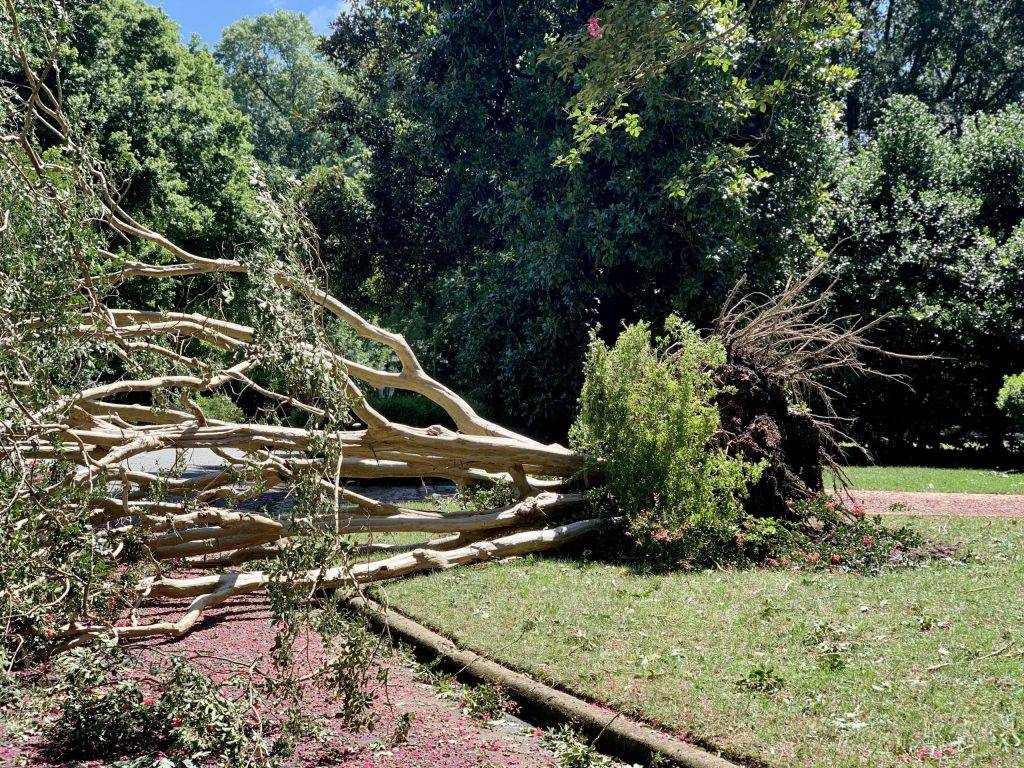
| The tree itself | Root plate, trunk, break point, and the direction of fall | Shows cause and whether decay was present |
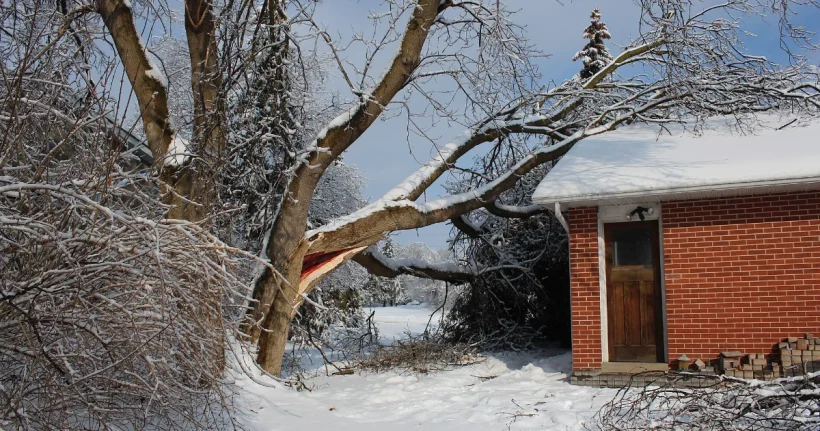
| Point of impact | Roof penetration, crushed gutters, broken rafters, cracked siding, shattered windows | Ties the damage directly to the tree |
| Interior damage | Ceiling collapse, water stains, wet flooring, damaged furniture and belongings | Supports contents and interior structure claims |
| Close-ups with scale | Individual damaged items with a tape measure or common object in frame | Lets the adjuster size damage without a second visit |
| Walkthrough video | A slow, narrated video of the whole property, inside and out | Captures detail still photos miss and records your account |
Two extra shots that homeowners routinely forget and adjusters routinely want: a photo of the tree’s stump or root ball showing whether the wood was sound or rotten, and any pre-storm photo of the tree standing healthy. Old family photos, real estate listing images, and street-level map imagery can all serve as before shots.
Building the written record
Photos show what. Your written record shows when, and who said what. Start a single dated file — paper or digital — the day the damage happens and add to it throughout.
- A dated narrative. What happened, at approximately what time, and what the weather was doing. Note the storm name or date if there was one.
- Weather confirmation. A screenshot of official weather data or a National Weather Service report for your area that day corroborates a wind or storm event.
- A call log. Every conversation with your insurer: date, time, the name of the person, and what was said or promised.
- An inventory of damaged property. Item, approximate age, original cost, and a replacement estimate.
- Your policy details. Policy number, deductible, and the specific coverage sections that apply.
- All receipts. Tarps, plywood, emergency tree work, temporary lodging, and any other out-of-pocket expense.
Follow up important phone calls with a short email summarizing what was discussed. A written trail is far easier to rely on later than a memory of a call.
When to bring in professionals
For minor damage, your own documentation is usually enough. For a significant loss, two outside opinions strengthen the file considerably.
A certified arborist
A consulting arborist can document the tree’s condition and, where the policy covers landscaping, appraise the value of what you lost. An arborist report is also the standard way to establish whether a tree was healthy before it failed — which matters enormously if an insurer suggests the failure was due to neglect rather than a covered peril. See arborist report cost for what to budget, and the International Society of Arboriculture’s arborist directory to find a credentialed one.
Licensed contractors
Independent written repair estimates from licensed contractors give you a number to compare against the adjuster’s figure. Get at least two. If your estimates come in well above the insurer’s offer, that gap is the basis for a documented negotiation rather than an argument.
What adjusters actually look for
Understanding the adjuster’s questions helps you document the right things from the start.
| Adjuster question | What answers it |
|---|---|
| Was the damage caused by a covered peril? | Weather records, photos of the break point and fall direction |
| Was the tree healthy before it fell? | Pre-event photos, arborist assessment, pruning and maintenance records |
| Did the homeowner prevent further damage? | Photos of tarping or boarding, plus receipts |
| What is the actual scope of damage? | Comprehensive photo set and contractor estimates |
| Was any of this pre-existing? | Dated images and any prior inspection reports |
The maintenance-record question catches people out most often. If you had the tree pruned or inspected in past years, dig out those invoices — they are direct evidence that you met your duty to care for the tree.
If the tree came from a neighbor’s property
Documentation matters even more when the tree was not yours. In most states, when a healthy tree falls in a storm, each owner’s own insurance handles their own damage — the tree’s origin does not automatically shift responsibility. Liability generally attaches only when the tree’s owner knew, or reasonably should have known, that the tree was hazardous and did nothing.
That makes evidence of prior notice critical. If you previously raised concerns about the tree, gather the texts, emails, or letters. Photograph the tree’s condition and the property line. Our guides to a neighbor’s tree falling on your house and a demand letter for tree damage cover the next steps, and whether damaged trees are covered by insurance explains how coverage generally works.
Common documentation mistakes
- Cleaning up first. The single most damaging error. Clear only what is an immediate hazard.
- Too few photos. Ten images of a major loss is not enough. A hundred costs nothing.
- No wide shots. Close-ups without context make it hard to prove scale.
- Discarding damaged belongings. Keep them until the claim resolves, or photograph them thoroughly first.
- Accepting the first offer without comparison. Get independent estimates before agreeing to a figure.
- Waiting too long to report. Most policies require prompt notice; delay itself can jeopardize a claim.
Frequently asked questions
How soon do I need to report tree damage to my insurer?
Most policies require “prompt” notice, which in practice means within roughly 24 to 48 hours. Document the scene first, then call. Check your own policy, since specific deadlines vary by insurer and state.
Can I remove the tree before the adjuster arrives?
Generally you should not, unless it is an immediate safety hazard or is causing ongoing damage. If you must move it urgently, photograph and video everything thoroughly first and keep all receipts for the emergency work.
Do I need an arborist report for a tree damage claim?
Not for every claim. It is worth the cost when the tree itself had significant value, when the insurer questions whether the tree was healthy, or when the loss is large enough that a professional opinion could meaningfully change the payout.
What if I have no photos of the tree before it fell?
Look for indirect evidence: real estate listing photos, older family photos, street-level map imagery, or neighbors’ pictures. An arborist can also often assess the condition of the remaining stump and wood after the fact.
Does documenting damage guarantee my claim gets paid?
No. Documentation proves what happened and how much it cost, but whether the loss is covered depends on your policy’s perils, exclusions, and limits. Thorough records do, however, remove the most common reasons claims get reduced or denied.
Should I keep a piece of the tree?
If decay or disease is likely to be disputed, keeping a section of the trunk that shows the break and any rot can be valuable. At minimum, photograph the break face and root plate in detail.
The bottom line
Photograph before you clean, write down what happened while it is fresh, keep every receipt, and leave the debris until the adjuster has seen it. Bring in a certified arborist and independent contractors when the loss is significant. Good documentation will not change what your policy covers, but it will make sure you are paid the full amount of what it does.
This article is general information only and is not legal, insurance, or financial advice. Coverage terms, notice deadlines, and liability rules vary by policy, state, and circumstance. Review your own policy and consult your insurer, a licensed public adjuster, or a qualified attorney about your specific claim.


 Jack Turner