
To tell if a tree is dying, look for a few clear warning signs: bare branches or thinning leaves, brittle twigs that snap instead of bending, bark that is cracking or falling away, fungus or mushrooms near the base, and a trunk that leans more than it used to. The fastest at-home check is the scratch test — scrape a small patch of bark with your thumbnail. Healthy wood is green and slightly moist just underneath; dead wood is brown, dry, and brittle.
A single symptom rarely means a tree is dying. Trees are resilient, and many bounce back from stress with the right care. But when several signs show up together — especially across the whole canopy instead of one isolated branch — the tree may be in real decline. This guide covers the seven most reliable signs, how to run the scratch test, how to tell a dead tree from a dying one, and when removal becomes the safer choice.
Signs a tree is dying at a glance
Most declining trees show a combination of canopy, bark, and root symptoms rather than one dramatic change. The table below summarizes what to watch for and what each sign usually means. Use it as a quick triage, then confirm with the scratch test and, when in doubt, a certified arborist.
| Warning sign | What it often means | What to do |
|---|---|---|
| Thinning or missing leaves | Root stress, disease, or drought | Check watering; inspect roots and trunk |
| Brittle twigs that snap | Branch or whole-tree dieback | Run the scratch test on several twigs |
| Peeling or cracking bark | Cankers, decay, or sunscald | Look for soft, hollow, or discolored wood |
| Mushrooms or conks at the base | Internal root or trunk rot | Treat as a possible hazard; get it assessed |
| New or worsening lean | Root failure or unstable soil | Keep clear; consult an arborist promptly |
7 signs a tree is dying
1. Bare branches or thinning leaves
Canopy decline is usually the first thing homeowners notice. A dying tree may leaf out late in spring, drop leaves early in summer, or grow leaves that are smaller, paler, or scorched at the edges. Pay attention to whether the thinning is spread across the whole crown or limited to one side — one bare section can point to a localized problem like a girdling root or a cracked limb, while a thin canopy everywhere suggests a systemic issue. Evergreens that turn brown and hold dead needles, or that shed needles heavily out of season, are sending the same message.
2. Brittle, dead twigs
Healthy small branches bend and flex; dying ones snap cleanly and look dry inside. Bend a few pencil-thick twigs from different parts of the tree. If they break with a dry crack and show brown, dehydrated tissue, that section is dead. Widespread brittle deadwood in the upper canopy — sometimes called stag-head dieback — is a strong indicator of a tree in decline.
3. Bark that is cracking, peeling, or missing
Bark protects the living layer of the tree. When it cracks vertically, falls off in sheets, or exposes smooth bare wood underneath, the tissue below has often died. Some species shed bark naturally, so compare against a healthy tree of the same kind. Sunken or discolored patches (cankers) and bare strips running down the trunk are common on stressed or diseased trees.
4. Fungus, mushrooms, or conks
Mushrooms growing on the trunk, at the base, or over the root zone usually signal that wood is decaying from the inside. Shelf-like growths called conks are especially concerning because they indicate established internal rot, which weakens the tree structurally even when the canopy still looks green. Fungal fruiting bodies at the base are one of the clearest warnings that a tree may be both dying and hazardous.
5. A sudden or worsening lean
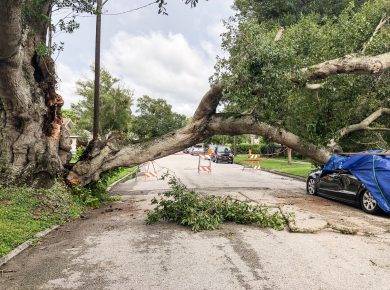
Many trees grow at a slight angle and are perfectly stable. The concern is a new lean, a lean that is getting worse, or a lean paired with heaving, cracked, or lifted soil on one side. That pattern points to root failure and means the tree could come down with little warning. Keep people and vehicles away from the fall zone and have it evaluated quickly.
6. Cracks, cavities, and trunk damage
Deep vertical cracks, large open cavities, and seams where two stems meet at a tight V can all compromise a trunk. Tap the trunk with a mallet or knuckles: a hollow sound over a large area suggests advanced internal decay. Carpenter ants streaming from the trunk, or piles of sawdust-like frass, often mean the wood inside is already soft and rotting.
7. Pests and borer holes
Boring insects target weakened trees. Small round or D-shaped exit holes, oozing sap, sawdust at the base, and unusual woodpecker activity can all signal an infestation tunneling through the layer that moves water and nutrients. Once borers are widespread, the tree is frequently past saving, though early detection sometimes allows treatment.
How to do the scratch test
The scratch test is the single most useful at-home check for whether a tree — or a specific branch — is still alive. It takes less than a minute.
- Pick a spot. Choose a young twig or a small patch on a branch. To judge the whole tree, also test low on the trunk.
- Scrape gently. Use your thumbnail or a pocket knife to scratch away a thin sliver of the outer bark.
- Read the layer underneath. Bright green and slightly moist means that part is alive. Brown, dry, and brittle means it is dead.
- Test several spots. Check twigs on different sides and at different heights. If every sample is brown, the tree is likely dead; if some are green, parts are still living and the tree may be saved.
Dead tree vs. dying tree: how to tell the difference
A dying tree still has living tissue and a chance of recovery; a dead tree has no living growth and will not come back. Distinguishing the two matters because a dying tree may respond to care, while a dead one becomes increasingly brittle and hazardous and usually needs removal.
| Indicator | Dying tree (may recover) | Dead tree (beyond saving) |
|---|---|---|
| Leaves in growing season | Thin, late, or partial canopy | None; brown leaves cling to bare limbs |
| Scratch test | Green and moist in places | Brown and dry everywhere |
| Buds in spring | Some living buds present | No buds; tips brittle |
| Bark | Cracking or patchy | Falling away, exposing bare wood |
| Structure | Mostly sound | Hollow areas, conks, soft rot |
Can you save a dying tree?
Often, yes — if you catch the decline early and the roots and trunk are still sound. Common rescues include correcting watering (both drought and overwatering stress trees), removing girdling roots, mulching properly without piling mulch against the trunk, pruning out dead and diseased wood, and treating identifiable pests or diseases. The earlier you act, the better the odds. Our guide on how to save a dying tree walks through each step, and a hands-on diagnosis from a professional is worth the modest certified arborist cost when a mature tree is at stake. For an authoritative overview of tree health and care, the International Society of Arboriculture publishes consumer guidance at treesaregood.org, and many university extension programs offer free diagnostic resources.
When to remove a dying tree
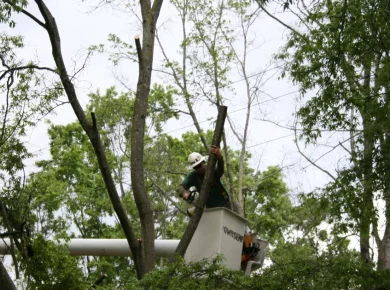
Removal becomes the safer option when a tree is dead, structurally unsound, or positioned where a failure could hit people or property. Warning signs that push a tree from “monitor” to “remove” include large dead limbs over a house or driveway, a trunk that is hollow or covered in conks, a worsening lean with lifted soil, and roots that have decayed. A dead or unstable tree near a structure should be treated as a hazard rather than a wait-and-see project; see our notes on how to prepare for a tree failure.
Cost varies with size, condition, and access, and dead trees can cost more because the brittle wood is unpredictable to cut. Use our tree removal cost guide for typical price ranges, and our emergency tree removal cost guide if the tree is an immediate danger. If the tree is on a neighbor’s land but threatens your property, our article on a dead tree on a neighbor’s property explains your options.
Once you have confirmed a tree is in decline, the next question is when to remove a tree versus trying to save it.
If the failing tree is next door rather than in your own yard, see our guide on a dead tree on a neighbor’s property for who is liable and how to document the hazard.
Frequently asked questions
How can you tell if a tree is dead or just dormant?
Run the scratch test in several spots. A dormant tree shows green, moist tissue under the bark and has living buds; a dead tree is brown and dry throughout with no buds. Dormancy is normal in winter, so judge deciduous trees during the growing season.
Can a tree recover after losing most of its leaves?
Sometimes. If the branches still pass the scratch test and the roots are healthy, a tree that dropped leaves from drought, transplant shock, or temporary stress can releaf. Persistent bare canopy across multiple seasons is a worse sign.
Is a leaning tree always dying?
No. A long-standing lean can be stable. A sudden or worsening lean, especially with cracked or heaved soil at the base, is the dangerous kind and warrants prompt professional inspection.
Should I remove a dying tree or try to save it?
If it is caught early and the trunk and roots are sound, saving it is often possible and cheaper. If it is dead, hollow, or leaning over a structure, removal is usually the safer choice. A certified arborist can give an objective recommendation.
This article is general information about tree health, not a substitute for an on-site inspection. Tree condition varies by species, region, and circumstances — have a certified arborist assess any tree you suspect is dying or hazardous.

 Jack Turner