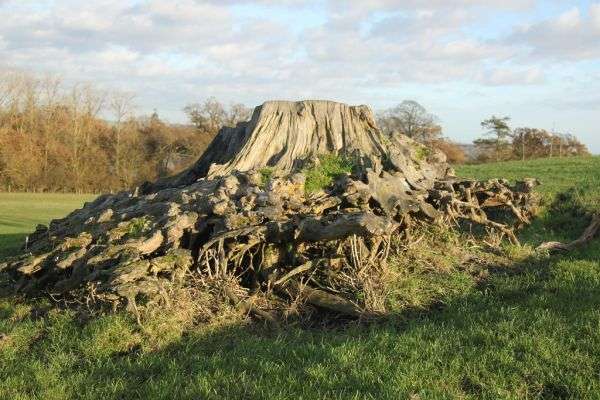

A cut stump isn’t always dead — many species resprout from the roots for years. Killing it properly stops the regrowth and lets it rot away.
The fastest way to kill a tree stump is to apply a chemical stump killer (potassium nitrate) or a concentrated herbicide to fresh cuts or drilled holes; the cheapest natural method is Epsom salt, which dries the stump out over several weeks. Grinding physically removes it instantly but costs more. Pick the method that matches your timeline and budget.
Here are five proven methods, what each costs, and how long it takes. To physically extract the stump instead, see how to remove a tree stump.
The 5 methods at a glance
| Method | Cost | Time to kill | Effort |
|---|---|---|---|
| Chemical stump killer | $10 – $25 | 4 – 6 weeks | Low |
| Epsom salt | $5 – $15 | 2 – 3 months | Low |
| Rock salt | $5 – $10 | 2 – 3 months | Low |
| Digging/grinding out | $0 (DIY) – $400 | Immediate | High |
| Cut-and-paint herbicide (fresh stump) | $15 – $30 | 2 – 4 weeks | Low |
1. Chemical stump killer
Drill several 1-inch holes a few inches deep into the top of the stump, fill with a potassium-nitrate stump remover, add water, and let it soak in. The chemical speeds decay so the wood becomes soft and crumbly in about a month. Keep children and pets away and follow the label.
2. Cut-and-paint (most effective on fresh stumps)
Right after cutting, paint the outer ring (the living cambium just inside the bark) with a concentrated glyphosate or triclopyr herbicide. The fresh stump pulls the chemical into the roots, killing the whole system. This is the most reliable way to stop resprouting.
3. Epsom salt (natural)
Drill holes, pack them with Epsom salt, and dampen. The salt draws moisture out of the stump, drying and killing it over a couple of months. It’s slower but pet-friendlier than herbicides. See our dedicated DIY removal guide for the full process.
4. Rock salt
Similar to Epsom salt but harsher — effective at killing the stump but it can leave salt in the soil, so avoid it near plants you want to keep.
5. Dig or grind it out
For an instant result, physically remove it. Small stumps can be dug and levered out; larger ones need a rented grinder (about $100–$200/day). This is labor-intensive but leaves nothing to resprout. Compare with professional grinding costs.
What to avoid
- Burning — banned in many areas and a fire risk; check local rules first.
- Bleach or diesel — ineffective and harmful to soil and groundwater.
- Over-salting near gardens — it can kill nearby plants.
Frequently asked questions
What kills a tree stump fastest?
Cut-and-paint herbicide on a fresh stump or a potassium-nitrate stump killer in drilled holes — both work in 2–6 weeks.
Does Epsom salt really kill a stump?
Yes, by drying it out, but it takes 2–3 months. It’s a good natural option.
Will the stump still need to be removed after it’s dead?
A dead stump rots faster and can be broken apart, but you may still grind or dig it for a clean yard.
Is chemical stump killer safe?
Used per the label and kept away from kids, pets, and waterways, yes. Natural methods avoid chemicals entirely.
Disclaimer: Follow all product labels and local regulations. General information, not professional or legal advice.


 Jack Turner