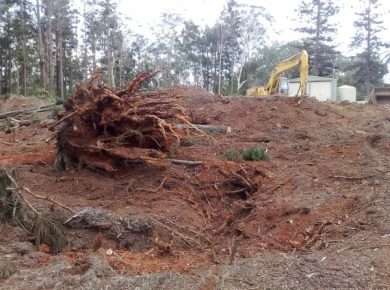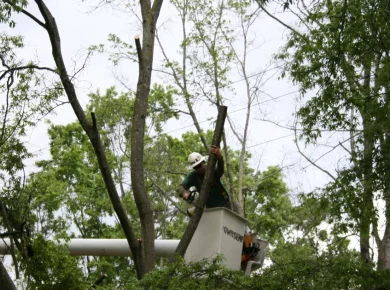

A tree that’s already on the ground is usually cheaper to remove than a standing one — there’s no climbing or felling — but the price still depends on size, where it landed, and cleanup.
Removing a fallen tree typically costs $75 to $750 for a tree already on the ground, rising to $1,000–$2,500+ if it landed on a structure, is tangled in power lines, or requires a crane. If it damaged a covered structure, your homeowners insurance may pay for removal.
Details below; if it’s an active emergency, see emergency tree removal cost.
Fallen tree removal cost
| Situation | Typical cost |
|---|---|
| Small tree, on open ground | $75 – $250 |
| Medium/large tree, on the ground | $250 – $750 |
| Fallen on a fence/shed | $500 – $1,500 |
| Fallen on the house / near power lines | $1,000 – $2,500+ |
Why it’s often cheaper than standing removal
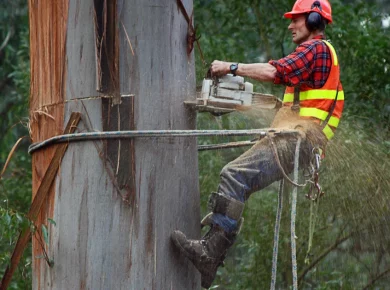
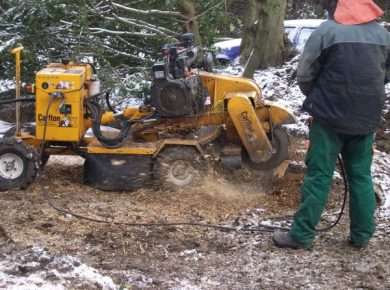
The dangerous part of removal — climbing, rigging, and controlled felling — is already done. Crews mainly cut the downed trunk into sections, haul it, and grind the stump if needed. That said, a tree on a structure or in lines can be more expensive because of the careful, hazardous extraction.
Does insurance cover it?
Homeowners insurance generally covers removal only if the fallen tree damaged a covered structure (house, garage, fence), usually with a removal sub-limit and your deductible. A tree that simply fell in the yard is typically your own cost. Who pays when it’s a neighbor’s tree depends on negligence — see TreeLaws on who’s responsible for removing a fallen tree.
What affects the price
- Size and weight of the downed trunk.
- Where it landed (open yard vs. on a structure or lines).
- Access for trucks/equipment.
- Stump grinding and debris hauling.
- Emergency/after-hours timing.
What to do
- Stay clear of any downed power lines — call the utility/911.
- Photograph the tree and any damage before cleanup (for insurance).
- If it hit a structure, file a claim and ask if removal is included.
- Get 2–3 quotes; confirm stump and hauling.
Related reading: when the fallen tree also damaged a fence — see what to do when a neighbor’s tree fell on my fence.
Willows break easily in storms; our willow tree removal cost guide covers pricing for this weak-wooded species.
Frequently asked questions
Is a fallen tree cheaper to remove than a standing one?
Usually yes if it’s on open ground — but a tree on a house or in power lines can cost more due to hazardous extraction.
Will insurance pay to remove a fallen tree?
Generally only if it damaged a covered structure; a tree that fell in the yard is typically your cost.
Does the price include the stump?
Often not — budget extra for grinding; see stump grinding cost.
What if a neighbor’s tree fell in my yard?
Removal usually falls to whoever’s land it’s on, unless the neighbor was negligent — see the TreeLaws guide linked above.
Disclaimer: Prices are general 2026 estimates and vary by region and situation. Insurance coverage depends on your policy. Get local quotes.


 Jack Turner